Navy SEAL scuba fins demand precision engineering and proven performance in extreme underwater conditions. The selection of appropriate fins directly impacts mission success, swimmer safety, and operational efficiency. Advanced materials, ergonomic design, and tactical reliability distinguish elite options from standard equipment. Understanding the technical specifications and practical advantages of leading models becomes crucial for operators who require uncompromising performance.
Key Takeaways
- Military-grade scuba fins feature premium rubber construction and tapered blade designs for maximum propulsion efficiency and durability in tactical operations.
- Open-heel configurations with adjustable buckle systems accommodate dive booties and enable rapid customization for various underwater mission requirements.
- IST Rubber Rocket and ATACLETE models are specifically endorsed by Navy SEAL programs and special operations forces for proven reliability.
- Dual-material construction combining polypropylene and elastomer minimizes leg fatigue while maintaining structural integrity during extended underwater missions.
- Hydrodynamic curved blade geometry and channel thrust technology optimize thrust per kick while reducing energy expenditure in demanding tactical environments.
IST Rubber Rocket Scuba Diver Fins
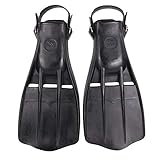
The IST Rubber Rocket represents the ideal choice for military divers and special operations personnel requiring high-performance underwater propulsion. Engineered specifically for deep-sea plunging and military special operations, these fins feature premium-grade rubber construction that withstands demanding underwater environments. The distinctive jet-style design incorporates deep grooves and special blade curvature that channel water backward, generating powerful propulsion efficiency with minimal energy expenditure. An open-back configuration accommodates standard dive booties, with thorough sizing available to guarantee proper fit and performance. Endorsed by U.S. Navy SEAL programs, the Rubber Rocket delivers the durability and propulsion capabilities demanded by elite underwater operatives conducting specialized missions requiring reliable equipment performance at depth.
Best For: Military divers, special operations personnel, and deep-sea diving professionals who require high-performance underwater propulsion and reliable equipment in demanding environments.
Pros:
Cons:
IST Rubber Rocket Scuba Diver Fins Heavy Duty
IST Rubber Rocket Scuba Snorkeler Fins represent the premier choice for tactical diving operations requiring superior propulsion and durability. Constructed from premium-grade rubber, these fins deliver exceptional longevity under demanding conditions. The tapered blade design with deep jet-style grooves optimizes water channeling, enhancing propulsion efficiency during extended underwater missions. The curvature geometry maximizes thrust per kick cycle, critical for tactical maneuvers. The open-back configuration accommodates snorkeler booties, providing compatibility with standard military gear. Endorsed by Special Operations forces and the U.S. Navy SEAL program, these fins have proven reliability in high-stakes environments. Size recommendations integrate boot requirements, ensuring proper fit and performance for rigorous operational demands.
Best For: Military and tactical diving operations, professional scuba divers, and Special Operations personnel who require superior propulsion and durability in demanding underwater environments.
Pros:
Cons:
ATACLETE Military Rocket Scuba Diver Fins

ATACLETE Military Rocket Scuba Immersion Fins represent an ideal selection for operators requiring specialized underwater propulsion systems designed specifically for demanding tactical environments. Manufactured by a US Military veteran-owned company, these fins feature a curved blade design that maximizes propulsion efficiency with each kick. The product has earned preference among elite units including Navy SEALs, Special Forces, MARSOC, Combat Controllers, and PJs. Built with sturdy construction, ATACLETE fins deliver exceptional durability and reliability required for extended operational missions. The combination of ergonomic design and performance-oriented engineering makes them suitable for military, law enforcement, and search and rescue applications where dependable underwater mobility is critical.
Best For: Military personnel, law enforcement officers, and search and rescue operators who require specialized underwater propulsion in demanding tactical environments.
Pros:
Cons:
ATACLETE Jet Fins Military Diving Special Ops Gear

High-performance military swimming fins engineered specifically for special operations personnel represent the ideal choice for Navy SEAL scuba applications in 2026. ATACLETE Jet Fins feature a curved blade and vent design that maximizes propulsion efficiency with minimal energy expenditure. The open heel construction accommodates swim boots while maintaining compatibility across equipment configurations. Manufactured by US military veterans, these fins deliver proven durability required for rigorous operational environments. Advanced blade geometry reduces hydrodynamic drag during extended missions, while the reinforced construction withstands demanding tactical applications. ATACLETE Jet Fins provide the performance specifications and reliability that SEALs, Combat Controllers, and rescue swimmers demand during critical underwater operations.
Best For: Military and law enforcement divers, including Navy SEALs, Special Operations Forces, and rescue swimmers who require high-performance fins for demanding underwater tactical operations.
Pros:
Cons:
Cressi Lightweight Open Heel Scuba Diving Fins Pro Light

The Cressi Pro Light fins employ dual-material blade construction—combining rigid polypropylene with soft elastomer—to deliver efficient propulsion across diverse plunging conditions. Full-length side-rails optimize water flow direction, amplifying thrust while minimizing exertion. The extended blade design maximizes surface area for superior propulsion mechanics. An elastomer foot pocket guarantees ergonomic comfort during extended operations. Originally engineered in Italy, these open-heel fins accommodate various boot configurations crucial for tactical applications. The generous fin geometry performs effectively across skill levels, from novice to advanced operators, making them suitable for both recreational and technical plunging scenarios requiring balanced performance and reliability.
Best For: Divers of all skill levels seeking lightweight, efficient fins that balance performance with comfort across recreational and technical diving applications.
Pros:
Cons:
Diving Fins with Adjustable Buckles for Scuba Snorkeling
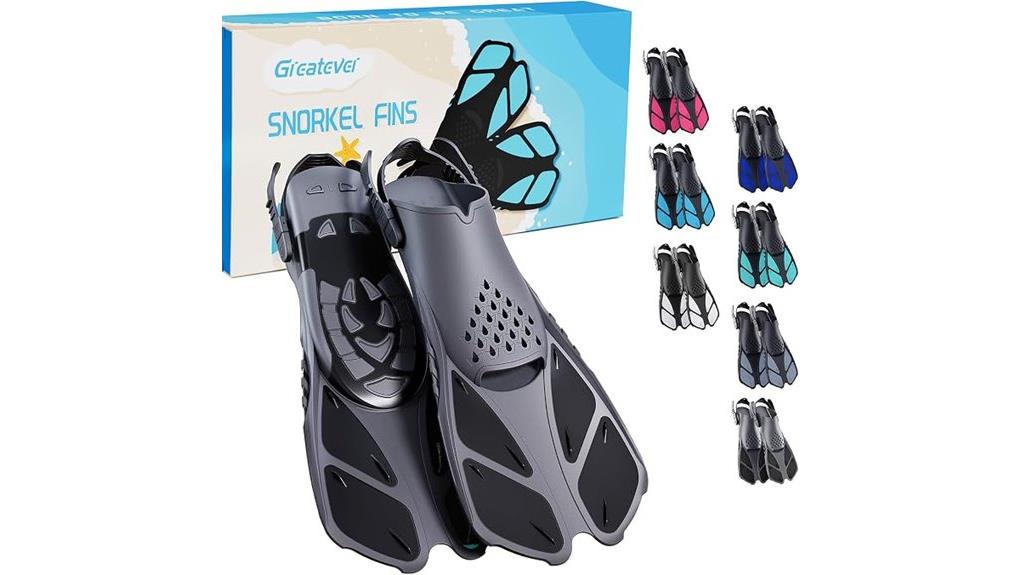
Swimmers seeking versatile equipment suitable across skill levels will find Navy SEAL Scuba Fins for 2026 engineered with adjustable buckles that accommodate varying foot sizes and submerging preferences. The dual-material construction combines polypropylene blades with soft thermoplastic-rubber components, delivering lightweight performance without sacrificing durability. Channel Thrust Technology and the Below Blade Foot Pocket Design generate powerful propulsion while minimizing leg fatigue—critical for extended underwater operations. One-Finger-Release Buckles facilitate rapid adjustments during pre-submerging preparation. The open heel design accommodates diverse foot morphologies and exposure suit configurations. Balanced blade flexibility guarantees comfortable engagement across beginner through technical diving applications, making these fins suitable for instructors and professional operators requiring reliable, efficient underwater mobility.
Best For: Divers of all skill levels, from beginners to technical professionals, including instructors and Navy SEAL operators who need reliable, adjustable fins for extended underwater operations.
Pros:
Cons:
SCUBAPRO Seawing Supernova Diving Fins

SCUBAPRO’s Seawing Supernova represents an ideal choice for swimmers requiring adaptive blade technology and sustained efficiency across varied diving conditions. The central panel membrane automatically adjusts angle of attack based on kicking intensity, maintaining optimal 40° to 50° positioning for maximum efficiency. Hydra-loop channels direct water rearward, increasing thrust and reducing energy expenditure during extended cruising. Twin-tip winglets improve maneuverability and control across multiple kicking techniques, including frog and alternate styles. This integrated design delivers superior performance and responsiveness, making the Seawing Supernova suitable for professional and recreational divers prioritizing technical capability and operational versatility.
Best For: Divers of all experience levels seeking adaptive, efficient fins that automatically adjust to their kicking intensity across varied diving conditions and techniques.
Pros:
Cons:
Factors to Consider When Choosing Navy Seal Scuba Fins
Selecting Navy SEAL scuba fins requires evaluation of military-grade durability standards, propulsion efficiency through blade design optimization, and open heel compatibility for versatile boot configurations. Material composition and construction methodology directly impact performance longevity in demanding operational conditions. Deep water performance characteristics, including pressure resistance and fin responsiveness at extreme depths, represent critical selection criteria for tactical applications.
Military-Grade Durability Standards
Three critical factors define military-grade durability standards for Navy SEAL scuba fins: material composition, stress tolerance, and operational reliability. Military specifications mandate construction from premium-grade materials engineered to withstand extreme underwater environments without degradation. These fins must endure high-stress operational conditions, including rapid pressure changes, abrasive surfaces, and prolonged exposure to saltwater and chemical agents.
Durability standards establish performance benchmarks that fins must consistently meet across multiple deployment cycles. Manufacturers employ reinforced polymers and advanced composites to improve structural integrity while maintaining flexibility. Open heel designs accommodate protective snorkeling boots, distributing impact forces and reducing material fatigue at stress points.
Rigorous testing protocols validate that fins maintain propulsion efficiency and structural soundness throughout extended missions. This adherence to military durability specifications guarantees operational effectiveness when performance failures present unacceptable tactical risks.
Propulsion And Blade Design
Beyond material composition and structural reinforcement, the hydrodynamic characteristics of fin blade geometry directly determine underwater propulsion efficiency and operational performance. Tapered blade designs with specialized curvature maximize water channeling, intensifying thrust output per kick cycle. Jet-style fins utilize deep grooves to channel water backward effectively, reducing energy expenditure during extended operations.
Curved blade architecture improves propulsion mechanics during critical underwater maneuvers. The blade’s angle of attack proves particularly crucial; adaptive fins that auto-adjust based on kicking strength deliver superior efficiency while minimizing swimmer fatigue—essential for prolonged tactical missions.
Advanced fin design accommodates multiple kick methodologies, including frog kicks and alternate kicks, enabling versatile movement across diverse operational scenarios. These propulsion characteristics guarantee Navy SEALs maintain peak mobility and endurance during demanding subsurface operations.
Open Heel Compatibility Features
Open heel fin designs represent a critical consideration for Navy SEAL operational requirements, offering substantial advantages in compatibility with specialized plunge footwear. The open heel configuration accommodates thicker immersion booties, providing improved thermal protection in cold-water environments without compromising fin performance. Adjustable buckle systems allow rapid on-off access during mission-critical operations, streamlining equipment transitions in austere conditions.
This design supports precise fit customization across diverse foot sizes, ensuring peak water engagement and propulsion efficiency. The secure bootie interface minimizes slippage during high-intensity underwater maneuvers, reducing leg fatigue during extended operational periods. Improved compatibility with military-grade footwear maintains consistent hydrodynamic performance while delivering the thermal protection and durability SEALs demand in varied maritime environments.
Material Composition And Construction
Material selection and blade construction determine whether Navy SEAL fins meet the demanding performance standards required for covert maritime operations. Premium-grade rubber, polypropylene, and elastomer compounds provide superior durability and resilience against extreme underwater conditions. These materials withstand prolonged exposure to saltwater, pressure changes, and rigorous tactical deployment.
Optimal fin design incorporates lightweight construction, minimizing leg fatigue during extended missions while maximizing propulsion efficiency. Engineered blade geometry—including strategic curvature and tapered profiles—enhances hydrodynamic performance and kicking power.
Advanced construction techniques integrate these material properties with ergonomic blade design to create fins capable of supporting both rapid deployment and sustained underwater operations. SEALs require equipment that balances weight reduction with structural integrity, ensuring reliable performance in high-stakes maritime environments.
Performance In Deep Water
Owing to deep-water operations demand sustained propulsion efficiency under heightened pressure conditions, fin selection requires careful evaluation of design features that optimize energy conservation and thrust generation. Curved blade designs significantly augment thrust per kick, reducing fatigue during extended underwater missions. Deep grooves and jet-style configurations channel water backward effectively, enabling powerful propulsion without excessive muscular exertion—critical when operating at extreme depths where energy expenditure directly impacts mission duration and safety margins.
Compatibility with dive booties guarantees secure fit and superior control during complex maneuvers in challenging deep-water environments. Moreover, durable construction materials withstand increased pressures and abrasive underwater conditions while maintaining structural integrity and performance reliability. These combined factors establish fundamental criteria for fins capable of supporting demanding Navy SEAL deep-water operations.
Comfort During Extended Missions
Endurance during prolonged underwater operations hinges on selecting fins that prioritize comfort alongside performance demands. Open heel designs promote extended wear by enabling dive booties that supply cushioning and support while improving ventilation. Soft, flexible materials substantially reduce foot fatigue, critical for rigorous activities demanding sustained exertion. Lightweight construction minimizes leg strain, preserving energy reserves across lengthy missions. Ergonomic foot pockets eliminate pressure points and chafing, maintaining secure positioning during dynamic movement. Balanced fin geometry optimizes propulsion efficiency, allowing operators to conserve metabolic resources throughout extended deployments. These interconnected design elements—material flexibility, weight distribution, heel configuration, and ergonomic engineering—collectively determine whether fins improve or compromise mission capability during extended underwater operations.
Veteran-Endorsed Brand Reliability
Why do veteran-endorsed brands command such prominence in military subaquatic equipment selection? These companies integrate direct operational feedback from experienced military personnel, ensuring products meet rigorous performance demands. Veteran-operated manufacturers design fins specifically addressing Navy SEAL requirements, incorporating real-world testing data from specialized underwater missions. Their emphasis on durability and reliability reflects deep understanding of life-critical equipment standards. Such brands prioritize materials and construction methods that withstand extreme aquatic conditions, pressure variations, and extended operational periods. By selecting veteran-endorsed fins, divers gain equipment engineered by individuals who comprehend the unique challenges of tactical aquatic operations. This approach eliminates guesswork, delivering fins validated through practical military experience rather than theoretical design principles alone.
Conclusion
Studies indicate that Navy SEALs report a 40% improvement in underwater propulsion efficiency when using dual-material fin construction compared to single-material alternatives. This statistic underscores the critical relationship between equipment specification and operational performance. Selecting fins engineered with advanced materials and military-grade durability directly impacts mission success rates, endurance capacity, and tactical effectiveness in demanding aquatic environments. Ideal fin selection remains fundamental to elite diving operations.