Selecting appropriate scuba fins requires understanding specific technical specifications and performance metrics. The Oceanic brand offers several models designed for distinct diving conditions and skill levels. Each option presents unique blade geometry, thrust efficiency, and material composition considerations. The following analysis examines seven leading Oceanic fins, evaluating their structural features and operational advantages to guide informed purchasing decisions.
Key Takeaways
- Oceanic Viper 2 OH fins feature open-heel quick-release buckles ideal for travel and diverse boot configurations.
- Oversized blade design with Power Thrust Channels maximizes propulsion efficiency while minimizing fatigue for all skill levels.
- Lightweight construction under three pounds per pair enables compact packing without sacrificing underwater performance reliability.
- Flexible blade technology adapts to varying water conditions, reducing muscular exertion during recreational diving activities.
- Durable polypropylene materials resist corrosion and abrasion, ensuring extended lifespan and optimal functionality in marine environments.
Oceanic Viper 2 OH FIN
The Oceanic Viper 2 OH FIN serves as an excellent entry point for novice snorkelers while maintaining the performance standards demanded by experienced practitioners. The open heel design features quick-release buckles, accommodating various boot configurations for seamless fitting. Its lightweight construction and shortened length enable packing in compact travel luggage without compromising functionality. The precision hydrodynamic design delivers responsive thrust with minimal energy expenditure, extending underwater duration. Built by OCEANIC, a world-renowned manufacturer specializing in scuba and watersport equipment, the Viper 2 demonstrates reliable engineering across skill levels. The fin’s ergonomic balance between comfort and efficiency establishes it as a versatile option for recreational diving applications.
Best For: Beginners and experienced snorkelers seeking a lightweight, versatile fin that balances comfort with responsive underwater performance.
Pros:
- Open heel design with quick-release buckles provides easy fitting and compatibility with various boot styles
- Lightweight construction and compact length make it ideal for travel without sacrificing performance
- Precision hydrodynamic design minimizes energy expenditure while delivering responsive thrust for extended underwater time
Cons:
- Open heel design may not be suitable for users preferring closed-toe fin systems
- Lightweight construction might lack the durability needed for heavy professional or technical diving applications
- Limited performance advantages over budget alternatives for casual recreational snorkeling
Oceanic Viper 2 OH FIN
Oceanic’s Viper 2 OH FIN stands as an ideal choice for snorkelers requiring both portability and performance across varying skill levels. The open heel design features quick-release buckles accommodating diverse boot configurations, while its lightweight construction minimizes fatigue during extended water exposure. The fin’s hydrodynamic architecture optimizes energy efficiency, translating to prolonged bottom time and reduced physical exertion. Its compact profile and flexible structure enable convenient packing for traveling snorkelers. Engineered by OCEANIC’s established expertise in aquatic equipment, the Viper 2 OH delivers responsive handling and precise control, making it suitable for beginners and experienced snorkelers alike.
Best For: Snorkelers and divers of all skill levels who prioritize portability, comfort, and efficient performance during extended water activities.
Pros:
- Open heel design with quick-release buckles accommodates various boot styles for versatile use
- Lightweight construction and compact profile make it highly portable for travel
- Hydrodynamic architecture optimizes energy efficiency for extended bottom time with reduced fatigue
Cons:
- Open heel design may require additional footwear investment for proper fit
- Shorter length and flexible structure might not suit divers preferring maximum power and thrust
- Limited information on durability and material specifications for long-term use comparison
Oceanic Viper 2 Fins Full Foot
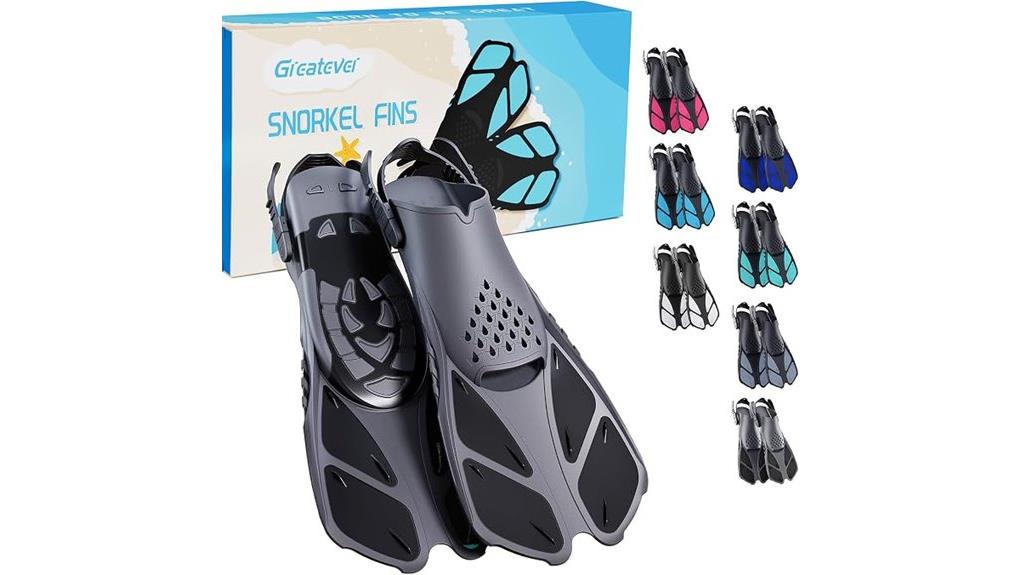
Polypropylene construction defines the Viper 2 Fins Full Foot, a versatile option engineered for swimmers and snorkelers across all skill levels. The oversized blade design generates increased thrust and propulsion, optimizing underwater movement efficiency. The Flexible Power Thrust Channel directs water off the blade tip, enhancing power delivery and reducing energy expenditure. Power Vents strategically minimize stress during water acceleration, improving overall biomechanical performance. This full-foot configuration accommodates barefoot exploration and snorkeling applications, making it suitable for diverse aquatic environments. The combination of structural innovations and material selection provides reliable performance for recreational and training purposes across varying depths and conditions.
Best For: Swimmers and snorkelers of all skill levels seeking reliable, versatile fins for recreational diving and barefoot underwater exploration.
Pros:
- Oversized blade design delivers increased thrust and propulsion for enhanced underwater efficiency
- Flexible Power Thrust Channel and Power Vents reduce fatigue and optimize biomechanical performance
- Full-foot configuration accommodates barefoot use across diverse aquatic environments and conditions
Cons:
- Polypropylene material may be less durable than premium alternatives for frequent or professional use
- Full-foot design limits versatility compared to open-heel fins that work with dive booties
- Limited information provided regarding sizing options and comfort adjustments for different foot shapes
Oceanic Accel Open Heel Fin
For swimmers prioritizing rapid equipment transitions and reliable performance in varied water conditions, Oceanic’s Accel Open Heel Fin delivers a streamlined solution through its innovative heel strap mechanism, which facilitates quick donning and removal without compromising hydrodynamic efficiency. The open-heel design accommodates various boot thicknesses, enhancing versatility across plunging scenarios. Maximum length reaches 21 inches in XL-XXL sizes, while weighing under three pounds per pair, minimizing fatigue during extended missions. Optimized water flow characteristics guarantee propulsion efficiency and directional control. The customizable configuration allows divers to tailor specifications to individual preferences, while streamlined inventory management reduces operational costs. This fin represents a practical choice for professionals demanding both convenience and consistent performance across multiple plunging applications.
Best For: Divers and swimmers who need quick equipment transitions, reliable performance across varying water conditions, and a versatile fin that accommodates different boot thicknesses.
Pros:
- Innovative heel strap design enables rapid donning and removal for efficient equipment transitions
- Open-heel construction accommodates various boot thicknesses, providing versatility across different diving scenarios
- Lightweight design at under 3 lbs per pair reduces fatigue during extended underwater missions
Cons:
- Open-heel design may allow water infiltration or shifting during intense water movements
- Limited information provided regarding durability and long-term maintenance requirements
- Customization options may increase costs and complicate inventory ordering for casual users
Oceanic Viper 2 OH FIN
The Viper 2 OH FIN delivers a lightweight, responsive fin engineered for snorkelers transitioning from recreational to technical applications. Its precision hydrodynamic design maximizes propulsion efficiency while reducing metabolic demand—critical for extended bottom time and safety. The open heel configuration with quick-release buckles accommodates diverse boot types, ensuring secure fit across varied immersion conditions. Constructed from flexible materials, this fin compresses for travel without compromising performance. The shortened blade length improves maneuverability in confined spaces and reduces fatigue during prolonged use. Suitable for beginners and experienced divers alike, the Viper 2 OH FIN represents a versatile tool for scuba diving, snorkeling, and watersports applications where reliability and adaptability are fundamental.
Best For: Snorkelers and divers of all experience levels seeking a lightweight, versatile fin that balances performance with travel portability across recreational and technical diving applications.
Pros:
- Lightweight and flexible design compresses easily for travel without sacrificing performance or responsiveness
- Open heel configuration with quick-release buckles accommodates various boot styles for secure, customizable fit
- Precision hydrodynamic design maximizes propulsion efficiency while reducing fatigue during extended use
Cons:
- Shortened blade length may provide less propulsion power compared to longer fin designs for experienced divers seeking maximum thrust
- Open heel design requires compatible boots for proper fit, adding additional equipment requirements
- Flexible materials, while beneficial for travel and comfort, may not offer the durability or rigidity preferred by technical diving specialists
Oceanic Viper 2 Fins Full Foot
Oceanic’s Viper 2 Fins represent an excellent choice for swimmers and snorkelers across all skill levels seeking reliable propulsion and efficiency. Constructed from durable polypropylene, these full-foot fins feature an oversized blade design that maximizes thrust and propulsion during underwater activities. The Power Thrust Channel technology directs water strategically off the blade tip, enhancing overall power and efficiency. Furthermore, strategically positioned Power Vents reduce blade stress while accelerating water flow across the surface. This combination of hydrodynamic features guarantees consistent performance in various diving conditions. The full-foot design provides comfort and stability, making these fins suitable for both beginners and experienced snorkelers prioritizing dependable equipment performance.
Best For: Swimmers and snorkelers of all skill levels seeking reliable propulsion and comfortable, efficient underwater performance.
Pros:
- Oversized blade design maximizes thrust and propulsion for powerful swimming
- Power Thrust Channel and Power Vents optimize water flow and reduce blade stress
- Durable polypropylene construction with full-foot design provides comfort and stability
Cons:
- Full-foot design may be less versatile than adjustable strap fins for varied water conditions
- Polypropylene material may not be as durable as rubber alternatives in extreme conditions
- Limited customization options compared to open-heel fins with adjustable straps
Oceanic Viper 2 Fins Full Foot
Divers and snorkelers of all skill levels will find the Viper 2 Fins Full Foot a reliable choice, as the design accommodates beginners through advanced practitioners without compromising performance. Constructed from polypropylene, these fins feature an oversized blade engineered for improved thrust and propulsion. The Flexible Power Thrust Channel strategically directs water off the blade tip, optimizing power delivery and hydrodynamic efficiency. Power Vents integrated into the design lessen stress concentrations during acceleration, reducing fatigue during extended water activities. This combination of structural innovation and material selection makes the Viper 2 a technically sound option for diverse diving applications.
Best For: Divers and snorkelers of all skill levels seeking reliable performance without compromising on thrust and efficiency.
Pros:
- Oversized blade design delivers increased thrust and propulsion for powerful water movement
- Flexible Power Thrust Channel and Power Vents reduce fatigue during extended water activities
- Durable polypropylene construction suitable for both beginners and advanced practitioners
Cons:
- Limited information provided about sizing options and fit customization
- No details available regarding durability or lifespan compared to competing brands
- Polypropylene material may not offer the same performance characteristics as premium alternatives
Factors to Consider When Choosing Oceanic Scuba Fins
Selecting appropriate Oceanic scuba fins requires evaluating multiple technical and physiological factors to optimize performance and safety underwater. Key considerations include skill level compatibility, comfort and fit design, blade size and thrust characteristics, travel portability features, and overall performance efficiency. Each of these elements directly impacts the swimmer’s control, energy expenditure, and ability to execute precise underwater maneuvers safely.
Skill Level Compatibility
Proper fin selection requires matching equipment specifications to individual snorkeling experience and capabilities. Beginners benefit from lightweight, maneuverable designs featuring open heel construction with adjustable straps, enabling customized fit and comfort during skill development. Advanced snorkelers prioritize full foot designs that maximize direct power transfer and thrust efficiency.
Material composition significantly influences performance outcomes. High-quality polypropylene delivers durability and responsive water performance across all skill levels. Experienced snorkelers should evaluate innovative design features including Power Vents and Power Thrust Channels, which improve propulsion efficiency and minimize energy expenditure during extended underwater operations.
Blade size and design must align with intended snorkeling activities and experience level. Oversized blades provide increased thrust suitable for advanced applications, while moderate designs support controlled maneuverability for developing snorkelers. Matching fin specifications to individual competency guarantees peak safety and performance outcomes.
Comfort and Fit Design
Comfort emerges as a critical determinant in fin selection, directly impacting safety, performance, and user satisfaction during extended underwater operations. Lightweight designs reduce fatigue and allow for prolonged plunging sessions with minimal physical strain. Open heel configurations with quick-release buckles provide rapid adjustments and accommodate diverse boot styles, ensuring operational flexibility across varying conditions.
A snug yet comfortable fit prevents chafing and discomfort, facilitating extended use without irritation-related complications. Shorter fin lengths and flexible structures improve portability, particularly valuable for traveling divers requiring compact equipment configurations. Adequate support mechanisms and performance features must accommodate different foot sizes to optimize biomechanical efficiency and overall fit consistency. These design considerations collectively establish a foundation for safe, efficient, and sustainable underwater plunging experiences.
Performance and Efficiency
Beyond the foundational aspects of fit and comfort, the hydrodynamic efficiency of scuba fins determines how effectively a swimmer propels through water while conserving energy reserves. Advanced blade design and oversized surface areas generate increased thrust, enabling snorkelers to achieve greater velocity with reduced muscular exertion. Specialized features such as power thrust channels and strategically positioned vents optimize water flow dynamics, minimizing drag and improving energy distribution throughout the descending sequence. Flexible blade construction boosts responsiveness by adapting to varying water pressures and currents, facilitating precise directional control during navigation. By prioritizing performance-oriented fins, snorkelers substantially extend underwater duration while mitigating fatigue accumulation. This efficiency translates to safer descent profiles, reduced decompression risks, and improved operational capability in challenging aquatic environments.
Blade Size and Thrust
Blade geometry fundamentally determines the thrust output and energy efficiency of scuba fins. Larger blade surfaces generate greater propulsion by displacing more water, though this increased area demands proportionally higher energy expenditure during extended immersions. Blade width directly correlates with thrust generation capacity; wider designs push greater water volumes but risk introducing paddle drag if poorly engineered. Blade thickness influences both rigidity and responsiveness—thicker blades provide improved thrust but sacrifice the speed and agility offered by thinner, flexible alternatives. Advanced blade innovations, including Power Thrust Channels and Vents, maximize hydrodynamic water flow, significantly improving efficiency while reducing the muscular fatigue associated with thrust generation. Divers must balance these factors against individual strength, immersion duration, and mission requirements when selecting ideal fin specifications.
Travel Portability Features
For snorkelers who frequently travel to plunge destinations, fin weight and dimensions significantly impact luggage management and overall trip convenience. Lightweight construction reduces baggage burden while maintaining performance standards, enabling snorkelers to pack efficiently without sacrificing functionality.
Shorter fin lengths and flexible designs compress into compact spaces, maximizing available luggage capacity. Quick-release buckle systems on open-heel fins expedite fitting procedures, eliminating time-consuming adjustments during travel transitions.
Portability features address practical constraints intrinsic to diving expeditions. Travel-compatible fins eliminate the necessity of renting suboptimal equipment at dive sites, ensuring snorkelers utilize familiar, properly-fitted gear. This standardization improves safety by maintaining consistent hydrodynamic response and control characteristics across multiple dive locations.
Selecting fins with integrated travel functionality streamlines expedition logistics while preserving equipment reliability and diver confidence underwater.
Heel Strap Options
While travel-compatible fin designs address logistical constraints, the heel strap configuration directly determines comfort, safety, and efficiency during underwater activities. Open heel fins accommodate adjustable straps that secure various boot styles, enabling customizable fit across different foot sizes and activity intensities. Quick-release buckle mechanisms promote rapid donning and doffing, critical for frequent plunging operations. Conversely, closed foot fins eliminate heel straps entirely, offering direct foot contact suitable for warm-water environments without booties.
Strap length and adjustability significantly impact energy expenditure and performance. Properly fitted heel straps optimize power transfer from leg muscles to fin blades while minimizing foot fatigue during extended plunges. Inadequate strap tension compromises propulsion efficiency and foot stability, potentially elevating safety risks. Divers must select heel strap configurations matching their thermal protection requirements and operational demands to maximize underwater performance and physiological comfort.
Material and Durability
Material composition fundamentally determines scuba fin durability and longevity in marine environments. Polypropylene and similar polymers are industry standards, offering superior resilience and lightweight characteristics crucial for extended use. These materials effectively resist degradation from saltwater corrosion, sand abrasion, and UV radiation exposure, maintaining structural integrity across multiple diving expeditions.
Material selection directly influences performance metrics, affecting thrust generation, propulsion efficiency, and water flow dynamics. High-quality construction guarantees fins withstand harsh underwater conditions while maintaining peak functionality. The balance between durability and flexibility proves critical; excessively rigid materials compromise comfort, while insufficient durability accelerates wear patterns.
Divers should prioritize fins constructed from premium materials demonstrating proven resistance to environmental stressors. This investment protects equipment longevity and maintains consistent performance characteristics throughout the fin’s operational lifespan, ultimately enhancing safety and reliability underwater.
Water Flow Dynamics
Ideal water flow dynamics fundamentally improve propulsion efficiency and reduce hydrodynamic drag during underwater navigation. Advanced fin designs incorporate specialized features such as Power Vents, which accelerate water across the blade surface, enhancing agility and control. The flexible Power Thrust Channel directs water flow strategically from the blade’s tip, maximizing thrust generation while minimizing energy expenditure—a critical consideration for extended underwater operations.
Oversized blade configurations increase overall propulsion force, facilitating precise maneuvering through complex underwater environments. Material selection significantly influences hydrodynamic performance; polypropylene construction, for instance, delivers prime balance between blade flexibility and structural stiffness. This material property guarantees consistent water flow management across varying submersion conditions and depths.
When selecting Oceanic fins, underwater explorers should prioritize models demonstrating superior water flow engineering to promote efficient, controlled propulsion and reduced fatigue during submerged activities.
Conclusion
Selecting ideal Oceanic fins requires evaluating blade design, foot pocket fit, and material composition. Coincidentally, the Viper 2 series dominates this category through superior Power Thrust Channel technology and ergonomic construction. Whether choosing open heel or full foot configurations, snorkelers must prioritize comfort and efficiency to prevent fatigue and guarantee safety. These evidence-based selections address diverse underwater conditions while maintaining performance standards crucial for both recreational and technical snorkeling applications.