Selecting appropriate scuba diving booties requires understanding the balance between thermal protection and foot stability. Neoprene thickness ranges from 3mm to 7mm, each suited for different water temperatures and diving conditions. Hard soles protect against sharp debris, while anti-slip rubber surfaces improve traction on slippery surfaces. Several key factors determine whether a bootie will deliver comfort and performance during underwater exploration.
Recommended Scuba Diving Booties


Tilos 5mm ThermoFlare Boots

PRODUCT SHIPS FOR FREE IN USA
Key Takeaways
- Neoprene thickness (3mm-7mm) determines thermal protection; choose based on water temperature and personal cold tolerance.
- Quality sole construction—hard rubber or anti-slip—prevents slipping on wet surfaces and protects feet from sharp debris.
- Adjustable features like zippers and Velcro straps ensure snug fit, minimize water entry, and enhance comfort during diving.
- Double-lined neoprene material provides flexibility, reduces chafing, and improves durability for extended underwater use and comfort.
- Heel design compatibility with open heel fins and proper foot positioning prevents fin strap slippage during dives.
Cressi Adult Unisex Crew Water Boots (7mm Neoprene)
Engineered with a practical zip design that extends from the sole to the ankle, the Cressi Adult Unisex Crew Water Boots represent an excellent choice for snorkelers who prioritize convenience without sacrificing thermal protection or durability. Constructed from 100% neoprene with 7mm thickness, these Italian-designed boots feature soft, double-lined construction for improved comfort during extended water activities. The thin flap seal positioned under the zip effectively minimizes water seepage, while the strong non-slip molding across the entire sole provides crucial grip and safety. Compatible with open heel fins, these boots accommodate users across five size options, making them suitable for scuba diving, surfing, and canyoning applications.
Best For: Water sports enthusiasts who need reliable thermal protection and easy on-off functionality for scuba diving, surfing, and canyoning activities.
Pros:
Cons:
Creshi Adult Neoprene Diving Boots with Hard Sole

For adventurers seeking reliable foot protection in moderate ocean temperatures, the Creshi Adult Neoprene Snorkeling Boots with Hard Sole deliver practical performance through thoughtful construction. The Baleari model features 3mm imported neoprene, soft double-lined material designed for medium warm ocean waters. The protective hard sole shields feet from sharp rocks and debris, while non-slip molding throughout improves grip and safety. Reinforced toe and heel sections resist wear effectively. The heel design accommodates open heel fins commonly used in scuba diving. These boots serve versatile purposes across various aquatic environments, providing both thermal insulation and structural protection during underwater examination.
Best For: Scuba divers and water sports enthusiasts who need reliable foot protection in moderate warm ocean temperatures while using open heel fins.
Pros:
Cons:
Cressi Adult Neoprene Diving Boots with Anti-Slip Rubber Sole
The Cressi Adult Neoprene Plunging Boots stand out as an excellent choice for snorkelers seeking reliable foot protection without excess weight, particularly those who prioritize both comfort and stability underwater. Constructed from 100% super elastic neoprene, these Ibiza 3mm boots deliver improved comfort during extended snorkeling sessions. The special heel design accommodates open heel fins perfectly, ensuring secure fit and best performance. The anti-slip rubber sole features strong molding across the entire outsole, with a small boss design preventing fin strap slippage. These imported boots require hand washing and air drying after each use. Designed by Cressi, a pioneering manufacturer in snorkeling equipment, they combine lightweight construction with practical functionality for recreational and experienced snorkelers alike.
Best For: Snorkelers and recreational scuba divers seeking lightweight, comfortable foot protection with reliable anti-slip performance and secure fin compatibility.
Pros:
Cons:
Cressi Adult Neoprene Diving Boots with Anti-Slip Rubber Sole
Cressi’s Ibiza 3mm neoprene plunging boots stand out as an excellent choice for divers who prioritize comfort during extended underwater excursions, since the Super Elastic Neoprene construction adapts to individual foot shapes while the specialized heel fitting accommodates open heel fins with precision. The back heel design guarantees reliable compatibility with standard fin types, while the non-slip rubber sole—featuring strong molding across the entire surface—provides crucial traction on slippery underwater terrain and boat decks. Maintenance proves straightforward; users simply rinse the boots with clean water after use and allow them to dry completely. Remarkably, the boots are machine washable, offering convenient cleaning options for regular divers. As an imported product from Cressi, a pioneering brand in scuba diving equipment, these boots deliver dependable performance for both recreational and serious underwater enthusiasts seeking durability and functional protection.
Best For: Divers seeking comfortable, durable neoprene boots with reliable traction for both recreational and serious underwater activities.
Pros:
Cons:
Adult Unisex Crew Water Boots for Scuba Diving & Surfing (5mm Neoprene)

Adventurers seeking dependable thermal protection and practical functionality will find these Italian-designed water boots particularly suited to their needs. Constructed from 100% neoprene in a 5mm thickness, they deliver consistent warmth across multiple water sports including scuba diving, surfing, and canyoning. The super elastic neoprene material provides improved comfort during extended wear, while the hard rubber sole offers crucial protection against rocks and pebbles. A specialized heel design guarantees compatibility with open heel fins, preventing strap slippage. The strong anti-slip rubber sole performs efficiently on wet surfaces, addressing critical safety concerns. Machine washable for convenient maintenance, these imported boots represent a practical investment for water sports enthusiasts prioritizing both protection and comfort.
Best For: Water sports enthusiasts and adventurers who need reliable thermal protection and durability for scuba diving, surfing, canyoning, and other aquatic activities.
Pros:
Cons:
XUKER Neoprene Water Socks 3mm for Beach & Water Sports
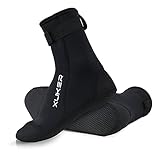
For water sports enthusiasts seeking affordable protection without committing to full diving boots, XUKER Neoprene Water Socks offer a practical solution combining warmth and versatility. Constructed from 90% neoprene and 10% nylon, these 3mm socks provide insulation for cooler waters while protecting feet during beach and water activities. The ergonomic design prevents wrinkles, ensuring comfortable wear during swimming, snorkeling, kayaking, and surfing. Flat seams and smooth openings minimize water entry without guaranteeing complete waterproofing. Abrasion-resistant soles facilitate free movement across various environments, from sandy beaches to rocky surfaces. Hand washing preserves the material’s integrity, and proper removal techniques prevent damage to the socks themselves.
Best For: Water sports enthusiasts and beach-goers who want affordable foot protection and warmth without investing in full diving boots.
Pros:
Cons:
Cressi Neoprene Anti-Slip Sole Water Sports Boots

The Cressi Neoprene Anti-Slip Sole Water Sports Boots stand out as an excellent choice for swimmers who prioritize ease of entry and compatibility with open heel fins. Constructed from 100% soft, double-lined neoprene, these boots provide thermal protection and durability across multiple water sports disciplines, including scuba plunging, snorkeling, rafting, and windsurfing. The zip mechanism extends from the sole to the ankle, facilitating quick donning and removal. A thin flap seal positioned beneath the zipper effectively minimizes water seepage, maintaining comfort during extended underwater sessions. The sole features strong non-slip moulding across its entire surface, delivering improved grip and stability on slippery surfaces. Available in five sizes—XS through XL—these boots accommodate diverse foot dimensions while maintaining consistent quality and performance standards for recreational and intermediate divers.
Best For: Swimmers and water sports enthusiasts who need reliable thermal protection, easy entry and exit, and compatibility with open heel fins across diving, snorkeling, rafting, and windsurfing activities.
Pros:
Cons:
BPS Neoprene Dive Boots with Anti-Slip Rubber Sole for Water Sports

BPS Neoprene Plunge Boots stand out for water sports enthusiasts who prioritize both protection and reliability across multiple aquatic activities, offering neoprene construction in 3mm, 5mm, and 7mm thicknesses to accommodate varying water temperatures and personal comfort preferences. The adjustable Velcro straps minimize water entry while preventing zipper slippage, and the heel ridge secures swim fins effectively. Hard-wearing vulcanized rubber soles deliver superior grip on wet surfaces, crucial for safety during water sports and beach activities. The company, operating as a small family business, backs products with a Right Choice guarantee covering replacements or refunds for quality issues. Customer support responds via email within twelve hours, and Amazon handles reliable US storage and shipping.
Best For: Water sports enthusiasts who need reliable foot protection across multiple aquatic activities including scuba diving, snorkeling, surfing, rafting, and windsurfing.
Pros:
Cons:
Factors to Consider When Choosing Scuba Diving Booties
Selecting appropriate scuba diving booties requires evaluating multiple technical specifications, including neoprene thickness for thermal protection, sole design and grip quality for underwater stability, and fin compatibility to guarantee seamless integration with diving equipment. Water temperature conditions directly influence material selection, as warmer environments may require thinner booties while cold-water expeditions demand thicker insulation to maintain body heat. Comfort and fit considerations, such as snug ankle support and proper sizing to prevent water circulation, ultimately determine both performance and safety during extended underwater exploration.
Neoprene Thickness Matters
Neoprene thickness stands as one of the most critical factors when selecting scuba diving booties, as it directly influences thermal protection, mobility, and buoyancy control underwater. Thickness options typically range from 3mm to 7mm, with each measurement serving specific diving conditions. A 3mm neoprene suits warmer waters, while 5mm and 7mm thicknesses provide vital insulation in cold environments. Thicker materials deliver superior thermal protection and improved abrasion resistance against rocky surfaces, yet they reduce flexibility and increase stiffness. Conversely, thinner booties allow greater foot mobility and natural movement. Furthermore, thicker neoprene increases buoyancy, potentially affecting diving techniques and skill execution. Divers must balance these competing factors against personal comfort preferences and water temperature expectations to select appropriate booties for their specific diving conditions.
Sole Type and Grip
While neoprene thickness establishes the foundation for thermal comfort and buoyancy control, the sole of a scuba snorkeling bootie plays a comparably significant role in determining overall safety and performance. Rubber soles with anti-slip molding provide superior traction on wet surfaces, preventing dangerous slipping during transitions between water and land. Hard soles offer critical protection against sharp rocks and rough underwater terrain, safeguarding divers’ feet from injury. Sole thickness directly influences both comfort and functionality; thinner designs improve dexterity and sensitivity, while thicker options deliver increased protection and insulation. Moreover, fin-friendly sole designs featuring specific grooves and ridges prevent swim fins from shifting or slipping during explorations. Divers should select sole types matching their typical diving environments and activity levels.
Fin Compatibility Design
Three critical design elements determine whether scuba swimming booties will function effectively with open heel fins: the heel structure, sole configuration, and fastening mechanisms. The heel structure must prevent slipping while accommodating the fin’s grip mechanism, often incorporating ridges or streamlined shapes that improve alignment during movement. Sole design significantly influences compatibility; non-slip molding guarantees fins remain securely attached and provides stability while swimming. Adjustable features, particularly Velcro straps, minimize foot movement within the bootie, promoting proper fin positioning and reducing misalignment issues. Proper sizing proves vital to this compatibility equation—booties must fit snugly without creating constriction that could compromise fin performance or cause discomfort. When these design elements work harmoniously together, divers experience peak fin function and improved underwater control.
Water Temperature Conditions
Selecting appropriate scuba plunging booties requires careful consideration of the environment where plunging will occur, as water temperature fundamentally determines the insulation requirements and overall protection a bootie must provide. Thicker neoprene, specifically 7mm options, suits colder waters by minimizing heat loss during extended plunges. Conversely, 3mm to 5mm booties work well in warmer climates, offering flexibility without excessive bulk. Many divers favor 5mm booties for temperate waters, as they balance warmth and mobility effectively. Cooler water booties often incorporate additional insulation features to improve thermal protection. Divers must assess both local water temperature ranges and personal cold tolerance to prevent hypothermia and guarantee comfort. Understanding these conditions facilitates well-informed choices that prioritize safety and adequate protection throughout the plunging experience.
Comfort and Fit
Once water temperature requirements have been established, attention must shift to how booties actually feel on the feet and perform during underwater exploration. A snug fit prevents water infiltration while maintaining adequate circulation for warmth and comfort. Adjustable features, including zippers or Velcro straps, facilitate easy donning and customizable fit adjustments. Double-lined neoprene construction improves flexibility and comfort, simultaneously reducing chafing during movement. Specialized heel and toe designs guarantee compatibility with open heel fins, providing secure fit and preventing slipping during plunges. These design elements work collectively to optimize the underwater experience, allowing divers to focus on exploration rather than discomfort or equipment concerns.
Durability and Materials
The longevity of scuba diving booties depends fundamentally on material selection and construction quality, with neoprene standing as the industry standard due to its flexibility, thermal insulation, and water-resistant properties. Neoprene thickness, ranging from 3mm to 7mm, directly influences both warmth retention and durability, with thicker materials offering improved wear resistance. Construction details significantly impact longevity; double-lined seams and reinforced zones at heels and toes prevent premature deterioration during demanding underwater activities. Anti-slip rubber soles provide crucial traction on wet surfaces, reducing injury risk during entries and exits. Maintenance practices, including thorough rinsing and proper air drying, substantially extend bootie lifespan and preserve material integrity over extended use.