Selecting appropriate scuba plunge masks for children requires careful evaluation of safety standards, optical clarity, and ergonomic design. Tempered glass lenses, hypoallergenic silicone construction, and adjustable straps represent vital features in quality pediatric masks. Nevertheless, specific product distinctions—ranging from anti-fog technology to single-lens configurations—create significant performance variations. Understanding these differences proves critical for ensuring both comfort and protection during underwater activities.
Recommended Masks for Kids


Key Takeaways
- Tempered glass lenses and soft silicone skirts ensure safety, durability, and leak-proof fit for underwater exploration.
- Adjustable straps and micrometric buckles accommodate growing children and varying head sizes for personalized comfort.
- Anti-fog technology with replaceable films and integrated coatings maintains clear visibility throughout extended snorkeling sessions.
- Low internal volume designs simplify water clearance and pressure equalization for young adventurers’ confidence.
- Hypoallergenic silicone construction prevents skin irritation while providing secure, comfortable sealing for prolonged underwater wear.
Cressi Junior Snorkeling Silicone Mask – Perla Jr
The Cressi Perla Jr represents an engineered solution for young adventurers requiring a mask with minimal internal volume—a critical specification for children undertaking deep underwater investigation. The dual-lens design with tempered glass provides impact resistance exceeding ANSI Z86.11-1985 standards. A low-profile construction maintains ideal field of view while the double-feathered skirt accommodates varying facial geometries. The soft silicone construction guarantees reliable sealing and comfort during extended wear. Micrometric buckles allow precise strap adjustment, while the accessible nose pocket aids pressure equalization without glove removal. Manufactured in Italy by Cressi, this mask prioritizes safety and performance for junior snorkelers and swimmers. Operators must observe the critical safety protocol of avoiding headfirst plunging entries.
Best For: Junior boys and girls seeking a high-performance snorkeling and diving mask with minimal internal volume and superior comfort for underwater exploration.
Pros:
Cons:
Speedo Unisex Child Adventure Mask Junior Swimsuit Separates

Speedo’s Unisex Child Adventure Mask represents an ideal choice for young swimmers seeking reliable underwater visibility and comfort during snorkeling activities. The mask features polycarbonate lenses with anti-fog coating, ensuring clear vision throughout extended water sessions. A silicone skirt provides a secure, leak-proof fit crucial for safety and enjoyment. The Speed Fit headstrap system allows quick, intuitive adjustments to accommodate varying head sizes. The included splash-resistant snorkel prevents water ingestion at the surface, a vital safety feature for novice snorkelers. These engineered specifications collectively address core requirements for pediatric snorkeling equipment, prioritizing both visibility and water protection to support confident, secure underwater exploration for children.
Best For: Children and young swimmers who are beginning to explore snorkeling and need a reliable mask with excellent visibility and safety features.
Pros:
Cons:
Kids Tidal Mask with Anti-Fog Technology for Scuba Diving and Snorkeling

Designed specifically for young swimmers aged 6 and above, the Kids Tidal Mask represents an ideal choice for children seeking reliable underwater visibility across scuba diving, snorkeling, and free diving applications. The mask incorporates tempered glass lenses engineered for safety and durability. Its anti-fog technology utilizes a replaceable thin film providing year-long protection against fogging, with optional Tidal Anti-Fog Spray for improved performance. The soft silicone skirt and two-way adjustable strap deliver secure, leak-free fit customization. The thorough package includes pre-adhered anti-fog films, protective coverings, anti-fog spray, and a travel case. A two-year manufacturer warranty guarantees coverage throughout extended use, providing parents confidence for their children’s underwater exploration endeavors.
Best For: Children aged 6 and above who want a reliable, safe mask for snorkeling, scuba diving, and free diving with excellent underwater visibility.
Pros:
Cons:
Cressi Snorkeling Silicone Set for Kids (Mask & Dry Snorkel)

For young snorkelers aged 7 to 15 years, the Cressi Ocean Junior set represents an ideal balance of safety, comfort, and functionality. Manufactured by the Italian heritage brand Cressi since 1946, this silicone mask and dry snorkel combination prioritizes child safety through tempered glass lenses and a dry top valve mechanism that automatically closes upon submersion, preventing water aspiration. The hypoallergenic silicone skirt guarantees both comfort and reliable sealing. The snorkel includes a bottom purge valve for efficient water drainage, while adjustable buckles and quick-release keeper attachments accommodate growing children. This thorough approach to equipment design reflects Cressi’s extensive expertise in diving and snorkeling safety standards.
Best For: Children aged 7 to 15 years who are beginning their snorkeling journey and need reliable, safe equipment with comfort-focused design.
Pros:
Cons:
ScubaPro Mini Vu Mask
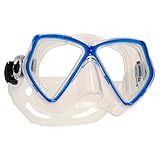
The ScubaPro Mini Vu Mask serves young adventurers and adults with smaller facial structures who require precision-engineered equipment for safe underwater investigation. Its dual-lens Ultra Clear design eliminates optical distortion, providing critical visibility for identifying marine hazards and navigation points. The hypoallergenic silicone skirt accommodates sensitive skin while the low-volume chamber promotes rapid water clearance—essential for emergency procedures. Quick-release buckles allow rapid adjustments without removing the mask, maintaining seal integrity during descents. This design prioritizes safety through improved optical clarity and operational efficiency, meeting the specific anatomical requirements of smaller divers while maintaining SCUBAPRO’s engineering standards for underwater equipment reliability.
Best For: Young adventurers and adults with smaller facial structures who need a precision-engineered mask for safe underwater exploration with superior visibility.
Pros:
Cons:
ScubaPro Solo Scuba Snorkeling Dive Mask

ScubaPro’s Solo mask represents an ideal choice for young adventurers seeking reliable underwater visibility and comfort during recreational scuba activities. Its frameless, low-volume design minimizes water entry risks while the tempered glass lens provides an expansive field of view critical for situational awareness. The crystal-clear, double-sealed silicone skirt accommodates various facial contours, ensuring a secure seal crucial for safety. Adjustable buckles and a nonslip strap prevent slippage during active plunging. Weighing merely 0.45 pounds, the Solo enables easy transport for traveling divers. The package includes a protective case and two-year warranty, providing long-term value and reliability for young divers transitioning to independent underwater discovery.
Best For: Young recreational scuba divers and snorkelers seeking a lightweight, comfortable mask with excellent visibility and reliable underwater performance.
Pros:
Cons:
Cressi Adult High-End Scuba Diving Mask (Big Eyes Evolution Crystal)

Adventurers seeking superior downward and lateral visibility will find an ideal solution in Cressi’s Big Eyes Evolution Crystal mask, distinguished by its patented inclined and inverted tear-drop lens design. The tempered glass lenses provide durability vital for demanding underwater environments, while crystal silicone construction resists yellowing and material degradation. Integrated buckles feature a swivel system enabling rapid strap adjustments for secure fit verification—crucial for preventing water leakage during descent. Manufactured in Italy by Cressi, a heritage brand since 1946, this high-end mask represents advanced optical engineering and material innovation. The patented design (US 6272693) optimizes field of view across lateral and lower zones, enhancing situational awareness underwater.
Best For: Experienced divers and snorkelers who prioritize superior downward and lateral visibility and are willing to invest in a premium mask with advanced optical engineering.
Pros:
Cons:
Mares Junior Keewee Mask – Single Lens Dive Mask for Scuba Diving & Snorkeling

Mares Junior Keewee Mask delivers ideal underwater vision for young swimmers aged 8 to 14 through its single-lens, wide-angle design. The tempered glass lens provides crystal-clear visibility and improved spatial awareness vital for safe submersion. Its low-profile frame minimizes water drag while maintaining a secure fit, critical for preventing mask displacement during active underwater exploration. The hypoallergenic silicone skirt creates a pressure-free seal, reducing discomfort during extended use. The adjustable elastic strap with side buckles allows rapid customization, accommodating individual head sizes and ensuring proper fit. This combination of optical clarity, secure positioning, and comfort optimization makes the Keewee Mask a reliable choice for introducing young explorers to underwater environments safely.
Best For: Young swimmers and snorkelers aged 8 to 14 who need a comfortable, secure dive mask with excellent underwater visibility for safe exploration.
Pros:
Cons:
Factors to Consider When Choosing Kids Scuba Dive Masks
Selecting an appropriate children’s scuba mask requires evaluating multiple critical parameters, including the child’s age and facial dimensions to guarantee proper seal and comfort during underwater activities. Key performance characteristics such as lens type, anti-fog technology, and visibility range directly impact safety and the quality of the aquatic experience. Moreover, comfort, fit quality, and adherence to recognized safety standards and certifications are non-negotiable considerations that protect young users during submersion.
Age and Face Size
Several critical factors must be evaluated when determining the appropriate scuba plunge mask for a child, with age and facial dimensions serving as primary considerations. Children’s facial structures vary significantly based on developmental stage, necessitating masks engineered with appropriately scaled frames and flexible materials to guarantee secure fitting.
For children aged 8 to 14, adjustable straps and conformable skirts accommodate the diverse face shapes within this demographic. Younger children benefit from masks featuring reduced internal volume, facilitating easier breathing and pressure equalization during submersion.
Proper mask fit is non-negotiable for safety and operational effectiveness. Ill-fitting masks permit water infiltration, compromising visibility and creating hazardous conditions. Therefore, selecting masks specifically designed for the child’s age group guarantees peak comfort, reliability, and underwater performance while maintaining crucial safety standards.
Lens Type and Visibility
Lens composition and optical design represent vital considerations in pediatric scuba mask selection, directly influencing underwater visibility and safety performance. Tempered glass lenses provide superior durability and optical clarity crucial for safe underwater navigation. Dual-lens designs expand peripheral vision, enabling young snorkelers to monitor their immediate environment more effectively. Low-profile lens positioning maintains proximity to the eyes, maximizing field of view and enhancing depth perception—critical factors for inexperienced snorkelers developing spatial awareness underwater. Wider lens areas further improve spatial orientation during underwater exploration. Anti-fog coatings and technologies prevent lens condensation, maintaining consistent visibility throughout explorations. These optical features collectively reduce visibility-related hazards and support the development of confident, safety-conscious diving practices in young snorkelers.
Comfort and Fit Quality
While optical features establish the foundation for underwater visibility, physical comfort and proper fit determine whether young adventurers can maintain focus on safety protocols and environmental awareness. A proper fit requires soft, hypoallergenic silicone skirts that create a snug seal without irritation. Adjustable straps with easy-to-use buckles accommodate varying head sizes and shapes, allowing quick modifications during use. Low-profile mask designs minimize drag and facial pressure, permitting unrestricted movement underwater. A small internal volume benefits children by simplifying water-clearing procedures and enhancing overall comfort during extended discovery. Furthermore, an accessible nose pocket allows pressure equalization, a critical safety function for snorkeling and swimming activities. These combined elements guarantee young swimmers remain comfortable and focused on their underwater experience while maintaining crucial safety awareness.
Safety Features and Standards
As children’s underwater activities involve fundamental physiological and environmental risks, scuba plunge masks must incorporate specific safety features and meet established standards to protect young users.
Tempered glass lenses provide superior durability and safety, exceeding impact test requirements for protective eyewear. A soft silicone skirt guarantees leak-proof fit and comfort during submersion. Accessible nose pockets assist pressure equalization, crucial for maintaining comfort during descents and preventing barotrauma.
Quick-adjust buckles allow secure fitting and rapid removal in emergencies. Certifications adhering to safety regulations for children’s underwater equipment validate reliable performance. These features collectively establish a thorough safety framework, assuring masks withstand environmental stressors while protecting young divers from injury. Prioritizing these standards minimizes risks and improves confidence during underwater exploration.
Anti-Fog Technology Options
Beyond the structural safety components that protect young swimmers from physical harm, optical clarity during submersion presents a distinct challenge requiring specialized technological solutions. Anti-fog technology in pediatric snorkeling masks maintains unobstructed vision, preventing visual impediments during underwater activities. Several implementation strategies exist: integrated anti-fog coatings provide baseline protection, while replaceable anti-fog films extend functionality for approximately one year with proper maintenance. Supplementary anti-fog sprays improve built-in features and prolong clarity duration. Ideal performance requires consistent maintenance protocols, including appropriate cleaning techniques and correct spray application. Manufacturers increasingly prioritize user-friendly anti-fog systems in children’s masks, minimizing visibility interruptions during snorkeling and swimming operations. Selection should emphasize masks combining durable anti-fog technology with accessible maintenance procedures, ensuring sustained optical performance throughout the swimming season.
Strap Adjustment Mechanisms
Securing a properly fitted mask requires attention to strap adjustment mechanisms, which represent a critical component in pediatric snorkeling equipment design. Micrometric buckles permit precise length modifications for consistent fit enhancement, while quick-release buckles assist with rapid adjustment and removal when necessary. Two-way adjustable strap systems accommodate varying head morphologies, reducing leak potential and enhancing comfort during extended underwater exposure. Elastic strap designs promote independent adjustment capabilities, encouraging confidence in young snorkelers. An inadequately fitted mask compromises comfort and creates dangerous distractions during aquatic activities. Effective strap mechanisms distribute pressure evenly across the head, minimizing discomfort and maintaining seal integrity. Parents and instructors should prioritize masks featuring versatile adjustment options that accommodate growth and adapt to individual anatomical differences, ensuring ideal safety and performance throughout the snorkeling experience.
Material and Durability
While proper strap adjustment mechanisms establish foundational fit parameters, the underlying materials and construction quality of a pediatric scuba mask determine its longevity and performance reliability.
Silicone emerges as the ideal material for mask skirts, offering hypoallergenic properties and comfort crucial for extended underwater exposure. Tempered glass lenses provide superior impact and scratch resistance, maintaining optical clarity during repeated use. The soft silicone skirt creates a leak-proof seal vital for plunge safety, preventing water infiltration that compromises visibility and buoyancy control.
Lightweight construction reduces fatigue during prolonged plunging sessions, allowing young divers to focus on technique rather than discomfort. Robust adjustment components guarantee sustained fit integrity throughout underwater exploration. Combined, these material specifications establish durability standards that withstand the demanding aquatic environment while prioritizing pediatric safety and performance.
Brand Heritage and Innovation
Brand heritage and innovation serve as critical differentiators when selecting pediatric scuba masks, as established manufacturers bring decades of specialized expertise to product development and safety protocols. Companies with strong water sports legacies understand the anatomical requirements specific to children’s facial structures, enabling precise mask design that optimizes both visibility and comfort.
Leading manufacturers invest substantially in advanced technologies, incorporating anti-fog coatings and leak-proof mechanisms that improve underwater performance. These innovations extend to material science, where hypoallergenic silicone formulations address sensitivity concerns while maintaining durability.
Rigorous compliance with safety standards and extensive testing protocols distinguish heritage brands from competitors. Such manufacturers conduct thorough evaluations simulating real diving conditions, ensuring their products withstand pressure changes and maintain structural integrity. This commitment to evidence-based design directly translates to safer, more reliable equipment for young divers.