Selecting the appropriate scuba plunge mask significantly impacts underwater performance and safety. The current market offers advanced options featuring tempered glass lenses, anti-fog technology, and ergonomic designs tailored to different diving styles. From frameless models to dual-lens systems, each mask presents distinct advantages. Understanding the specific features and considerations that differentiate top performers proves crucial before making a purchase decision.
Recommended Scuba Dive Masks


Key Takeaways
- Tempered glass lenses with anti-fog technology deliver crystal clear vision across varying underwater pressure and lighting conditions.
- Low-volume frameless designs minimize drag, simplify equalization, and enhance visibility during extended diving sessions.
- Double-sealed silicone skirts ensure watertight performance and accommodate diverse facial shapes for secure, comfortable fits.
- Quick-adjust buckles and nonslip straps enable easy donning, removal, and secure positioning throughout prolonged dives.
- Specialized lens options like SeeSharp HD technology and prescription-adaptable systems cater to recreational and technical divers’ visibility needs.
ScubaPro Solo Scuba Snorkeling Dive Mask
The ScubaPro Solo represents a prime choice for recreational divers and frequent travelers seeking a reliable mask without excess bulk. Its frameless, low-volume design minimizes drag and promotes easy equalization underwater. The tempered glass lens provides an expansive field of view critical for situational awareness during dives. A double-sealed silicone skirt guarantees water-tight performance while accommodating various facial geometries. The adjustable buckles and nonslip strap deliver secure positioning during extended use. Weighing merely 0.45 pounds, portability remains uncompromised. The package includes a protective case, and ScubaPro backs the mask with a two-year warranty, offering reliability for repeated use in diverse diving conditions.
Best For: Recreational divers and frequent travelers who need a reliable, lightweight mask that won’t compromise on visibility or comfort.
Pros:
Cons:
Cressi F1 Scuba Diving Snorkeling Frameless Mask
For snorkelers prioritizing affordability without compromising functionality, Cressi’s F1 frameless mask delivers exceptional value at approximately half the cost of comparable models. The Italian manufacturer’s frameless design bonds high-grade silicone directly to tempered glass, certified by CE standards. Its low-profile construction folds flat for convenient storage in BC pockets. The integrated quick-adjust strap buckles provide flexible fit with minimal drag. Low internal volume promotes effortless water clearing, vital for efficient underwater operations. Manufactured in Taiwan by the 1946-founded Cressi brand, the F1 combines proven engineering with practical simplicity, making it ideal for divers demanding reliable performance and cost-effectiveness.
Best For: Budget-conscious snorkelers and scuba divers who prioritize affordability and simplicity without sacrificing functionality and reliability.
Pros:
Cons:
Oceanways Superview/HD Anti-Fog Mask

Adventurers seeking improved underwater clarity and reduced visual fatigue will find the Oceanways Superview/HD Anti-Fog Mask a technical solution designed for extended bottom time. The SeeSharp High Definition Lens technology sharpens visibility while minimizing optical distortion through edge definition and UV filtration. Lens coloration varies by mask silicone—orange on black, blue on white—converting harsh ambient light to calming blue wavelengths that reduce eye strain. This spectral filtering improves visual comfort during prolonged immersion. The mask arrives with protective storage housing, ensuring lens preservation between swims. The anti-fog functionality maintains clarity throughout extended underwater sessions, addressing a primary concern for technical and recreational divers alike.
Best For: Divers seeking enhanced underwater clarity and reduced eye strain during extended diving sessions who want superior optical performance and visual comfort.
Pros:
Cons:
ScubaPro Solo Scuba Snorkeling Dive Mask

Recreational divers prioritizing lightweight portability and minimal bulk will find the ScubaPro Solo an exceptional choice among 2025 immersion masks. Its frameless, low-volume design reduces water displacement and equalization effort during descents. The tempered glass lens delivers an expansive field of view critical for situational awareness underwater. A double-sealed silicone skirt adapts to diverse facial geometries, establishing reliable watertight integrity. Easily adjustable buckles paired with a nonslip strap promote secure positioning. Weighing merely 0.45 pounds, this mask travels efficiently. The package includes a protective case and two-year warranty, supporting long-term value for recreational and travel-focused applications.
Best For: Recreational divers and travelers who prioritize lightweight portability, minimal bulk, and easy equalization during underwater descents.
Pros:
Cons:
Cressi Matrix Adult Scuba Diving and Snorkeling Mask
The Cressi Matrix represents an ideal choice for swimmers who prioritize downward visibility and instrument monitoring during underwater operations. Its patented tear-drop lens design, engineered in Italy, delivers superior downward and lateral sight lines compared to conventional masks. The tempered glass lenses maintain optical clarity while withstanding pressure changes across depth ranges.
The mask’s exceptionally low internal volume promotes equalization and appeals to both recreational and technical divers. A hypoallergenic silicone skirt provides secure sealing with minimal drag. These engineering features make the Cressi Matrix particularly effective for BCD checks and instrument readings—critical functions during standard diving procedures.
Best For: Divers of all experience levels who need superior downward visibility and easy instrument monitoring during underwater operations.
Pros:
Cons:
Hollis M1 Frameless Scuba Diving Freediving/Spearfishing Dive Mask
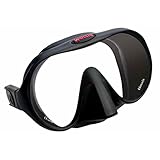
For snorkelers who demand superior optical clarity in challenging underwater environments, the Hollis M1 Frameless represents an ideal choice. The mask features ultra-clear glass with high light transmittance, effectively minimizing green tint while delivering distortion-free vision—particularly advantageous in low-light conditions. Its frameless construction incorporates a 100% pure silicone skirt that provides both comfort and reliable sealing, accommodating adventurers with facial hair. The silicone skirt wraps strategically around the nose and forehead, preventing water infiltration even during extended plunges. Quality buckles and a straightforward strap mechanism aid effortless donning and removal. Hollis’s engineering prioritizes technical diving applications, delivering a mask engineered for demanding underwater professionals and serious recreational divers requiring dependable performance across diverse diving disciplines.
Best For: Scuba divers, freedivers, and spearfishers who prioritize optical clarity and reliable sealing in challenging underwater environments, including those with facial hair.
Pros:
Cons:
ScubaPro Frameless Gorilla Mask

Explorers with larger facial structures benefit significantly from the ScubaPro Frameless Gorilla Mask’s oversized single-lens design, which delivers an expansive field of view while accommodating anatomical variations that standard masks cannot address. The soft silicone skirt features a double-edge seal engineered for secure fit on bigger faces. Adjustable buckles attached to flexible tabs facilitate precise customization, while the wide headband distributes pressure evenly across the back of the head, reducing fatigue during extended underwater sessions. SCUBAPRO’s construction prioritizes durability and comfort, making this mask suitable for swimmers prioritizing reliable visibility and performance across various subaquatic applications.
Best For: Divers with larger facial structures who need an expansive field of view, superior comfort, and a secure, watertight seal during extended underwater exploration.
Pros:
Cons:
SCUBAPRO Zoom Scuba Mask with Dual Lens and Lens-Change System

Divers requiring prescription lens capability will find the SCUBAPRO Zoom particularly advantageous owing to its quick-change optical lens system, which allows mid-plunge adjustments in under one minute without requiring tools. The dual-lens construction delivers ultra-clear visibility of underwater environments while maintaining low volume for minimal water displacement. Tempered glass lenses provide superior scratch resistance and optical clarity. The silicone skirt incorporates integrated buckles facilitating precise fit adjustments, ensuring reliable seal integrity across various facial geometries. Weighing 0.46 pounds, the mask suits scuba diving, freediving, and snorkeling applications. SCUBAPRO backs the product with an extensive two-year warranty, establishing durable long-term value for recreational and technical divers alike.
Best For: Divers requiring prescription lens capability who value quick optical adjustments, superior clarity, and reliable performance across scuba diving, freediving, and snorkeling activities.
Pros:
Cons:
Factors to Consider When Choosing Scuba Dive Masks
Selecting an appropriate scuba mask requires evaluating several critical performance parameters that directly impact underwater safety and comfort. Field of view quality, comfort and face fit, lens material durability, low volume design, and seal and leak prevention capabilities collectively determine whether a mask will perform reliably during extended immersion. Each factor presents distinct trade-offs that snorkelers must weigh based on their specific conditions, facial anatomy, and operational requirements.
Field of View Quality
Field of view quality represents a critical consideration in scuba immersion mask selection, as it directly influences a diver’s situational awareness and safety underwater. Lens design and shape fundamentally determine visibility capabilities, with wider lenses and frameless designs reducing blind spots and improving lateral sight. Low-volume masks restrict field of view compared to large single-lens alternatives. Tempered glass lenses minimize distortion while boosting light transmission, providing clearer underwater visibility. Tear-drop or inclined lens shapes improve downward visibility, enabling divers to monitor equipment and surroundings effectively. Mask skirt fit and comfort significantly impact seal integrity; improper fit creates gaps allowing water intrusion and obstructing vision. Selecting masks prioritizing expansive lens geometry and secure skirt design maximizes field of view quality for best diving performance.
Comfort and Face Fit
While field of view quality establishes visual capabilities underwater, comfort and face fit determine whether a snorkeler can maintain that visibility consistently throughout an immersion. A properly fitted mask requires a silicone skirt that molds precisely to facial contours, creating a watertight seal without gaps around the forehead and cheekbones. Adjustable buckles and nonslip straps facilitate customization, reducing discomfort during extended descents. Low-volume designs minimize bulk and decrease equalization effort, enhancing overall comfort. Hypoallergenic silicone materials prevent skin irritation for sensitive divers, while careful attention to snug fitting without pinching guarantees both comfort and reliable performance. These elements work synergistically to prevent leaks and maintain seal integrity, allowing divers to focus on their underwater experience rather than mask adjustments.
Lens Material Durability
Lens material durability fundamentally impacts a scuba plunge mask’s longevity and performance in demanding underwater environments. Tempered glass remains the industry standard, offering superior scratch resistance and optical clarity. The manufacturing process involves subjecting glass to high temperatures, significantly increasing strength and impact resistance while reducing shattering risk. Polycarbonate lenses present a lighter alternative but sacrifice some durability and visual acuity compared to tempered glass. The material choice directly influences how well masks withstand abrasive conditions, pressure changes, and handling during transport and storage. Selecting masks with proven durable lens materials guarantees extended usability in rugged diving settings. Complementary maintenance practices—including regular cleaning and proper storage—further preserve lens integrity and extend overall mask lifespan, protecting the investment.
Low Volume Design
Low-volume mask design represents a significant advancement in scuba equipment engineering, fundamentally altering how underwater explorers interact with their masks submerged. These frameless designs minimize internal air space, reducing equalization effort and simplifying water clearance procedures. The closer facial fit improves peripheral vision while decreasing hydrodynamic drag, critical factors for both recreational and technical swimming applications.
Practical advantages extend beyond comfort. Lower internal volumes demand less air consumption during pressure equalization, a benefit particularly pronounced during deeper descents where air consumption becomes economically significant. The reduced bulk and compact profile enable convenient storage and transport, making low-volume masks ideal for traveling divers.
Ergonomic benefits appear through extended underwater sessions with minimal facial fatigue. The streamlined design addresses multiple operational demands simultaneously, establishing low-volume masks as vital considerations for divers prioritizing efficiency and performance underwater.
Seal and Leak Prevention
Maintaining a watertight seal represents one of the most critical performance factors in scuba mask selection, as water intrusion compromises visibility and comfort during underwater operations. Double-sealed silicone skirts conform to diverse facial geometries, establishing dependable waterproof fits. Frameless designs promote closer facial contact, reducing leak potential compared to traditional framed alternatives. Quality buckle systems maintain consistent strap tension, preventing seal degradation during descents. Regular maintenance protocols—including silicone skirt inspections for tears and mask alignment verification—preserve seal integrity over time. These technical considerations directly impact dive safety and experience quality, making seal reliability a non-negotiable specification when evaluating mask performance.
Weight and Portability
While seal integrity establishes the foundation for reliable underwater performance, weight and portability considerations significantly influence mask selection for snorkelers who prioritize comfort and travel convenience. Modern scuba masks typically weigh 0.45 to 0.46 pounds, offering substantial portability advantages for traveling snorkelers. Lightweight designs reduce fatigue during extended plunging sessions, directly enhancing overall underwater performance. Low-volume masks provide compact profiles, facilitating efficient storage in gear bags and BC pockets without consuming excessive space. For frequent travelers, minimal mask weight prevents luggage overages while maintaining accessibility. High-quality materials guarantee lightweight masks withstand repeated travel stress and harsh diving environments. The combination of reduced weight and durable construction allows snorkelers to achieve peak comfort levels while maintaining reliable equipment functionality across various diving destinations.
Optical Clarity Features
Crystal-clear visibility underwater depends critically on lens quality and design specifications that directly impact a snorkeler’s ability to observe marine life and navigate safely. Tempered glass lenses outperform plastic alternatives by minimizing optical distortion while providing superior durability. Low-volume mask designs reduce air pockets between face and lens, enabling efficient clearing and improved downward visibility. Anti-fog coatings prevent condensation buildup that compromises sight during extended immersions. High-definition lenses sharpen underwater visibility by defining edges and filtering UV radiation, reducing glare and eye strain. Colorless lenses without tints preserve natural color recognition, allowing snorkelers to accurately perceive the vibrant spectrum of the marine environment. These optical features collectively determine visibility quality and safe underwater exploration.
Strap Adjustability Systems
A secure fit directly determines mask performance underwater, and strap adjustability systems provide the mechanism for achieving ideal positioning across diverse face shapes and sizes. Modern plunge masks employ integrated buckles within the skirt design, enabling rapid strap length modifications without requiring additional tools.
Quality strap systems incorporate nonslip materials and wider headbands to distribute pressure evenly, reducing discomfort during extended underwater sessions. Proper adjustment minimizes water infiltration by maintaining consistent face contact, thereby preserving optical clarity and visibility throughout the plunge.
Additionally, optimized strap tension decreases hydrodynamic drag, contributing to improved plunge efficiency. The relationship between strap adjustability and overall mask stability underscores its importance as a fundamental consideration when selecting appropriate equipment for underwater exploration.