Diving rash guards with hoods represent a practical solution for water enthusiasts seeking protection from UV exposure, temperature fluctuations, and physical abrasion during aquatic activities. These garments combine functional design with aesthetic appeal, utilizing materials like nylon and spandex to provide durability and comfort. The integration of hoods offers additional thermal insulation and safeguarding for sensitive facial areas. Understanding the distinctions between leading options becomes crucial for selecting appropriate gear.
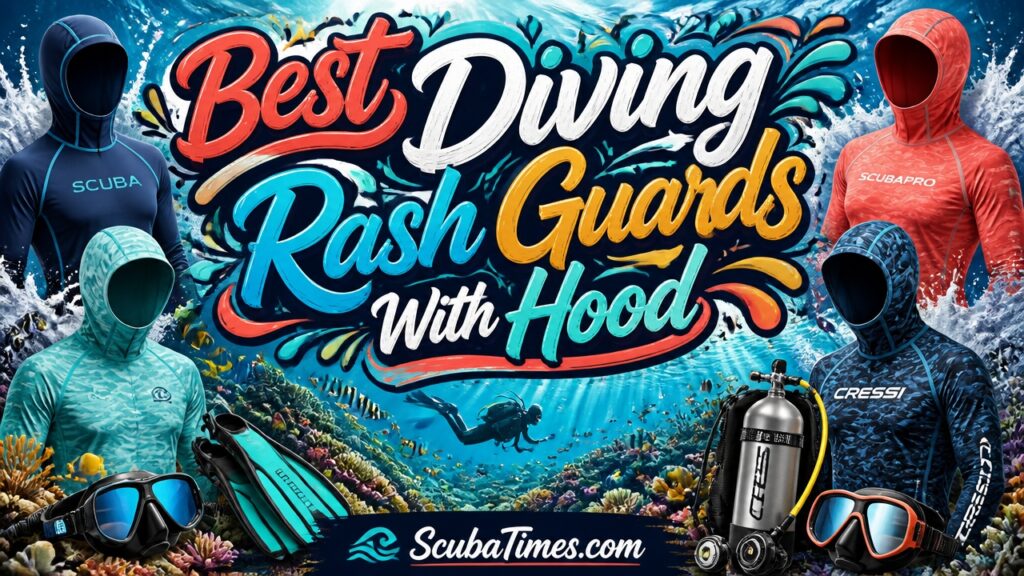
Recommended Rash Guards With Hood


Key Takeaways
- Hooded rash guards provide comprehensive UV protection with UPF 50+ ratings, blocking 98% of harmful UVA and UVB rays effectively.
- Cressi brand offers multiple hooded options featuring nylon-spandex blends with neoprene padding for thermal insulation and durability during diving.
- Anatomical cuts and seamless chest designs ensure comfort, flexibility, and minimal chafing during extended water sports activities and spearfishing.
- Camouflage patterns combined with hooded designs enhance style while providing practical concealment benefits for underwater videography and spearfishing applications.
- Quick-drying, snug-fitting hoods minimize water entry and heat loss while allowing layering beneath wetsuits for additional warmth in cold water.
Cressi Elastic Diving Hood with Bib (Keep Warm)

The Cressi Elastic Submerging Hood with Bib stands out as an ideal choice for divers seeking reliable head protection combined with thermal insulation, particularly those who plan to wear the hood beneath wetsuits or rash guards for extended underwater activities. Manufactured by Cressi, an Italian brand with seven decades of diving equipment expertise since 1946, this hood features durable elastic nylon construction that provides anti-UV protection. The one-size-fits-all design accommodates unisex-adult users across multiple water sports, including scuba diving, spearfishing, and surfing. Weighing merely 0.15 pounds, the hood remains lightweight and convenient for travel. Customer ratings of 4.6 out of 5 stars demonstrate its reliability, while the thorough 2-year limited warranty reflects manufacturer confidence in product quality and durability.
Best For: Divers and water sports enthusiasts seeking reliable head protection with thermal insulation for extended underwater activities, whether diving beneath wetsuits or engaging in scuba diving, spearfishing, and surfing.
Pros:
Cons:
Cressi Camouflage Rash Guard for Scuba Diving
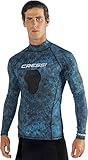
Designed specifically for underwater videomakers and spearfishing enthusiasts, Cressi’s Camouflage Rash Guard stands out as an exceptional choice for adventurers seeking both protective functionality and tactical versatility. Constructed from 80% nylon and 20% spandex with a 190 g/m² thickness, this crew-neck garment delivers robust UV protection while maintaining flexibility. The seamless chest features a durable pad designed for speargun loading, accommodating the specific demands of spearfishing. Wearers can layer it beneath neoprene wetsuits for improved insulation or position it over solid-colored suits for camouflage advantages. Its anatomical cuts support diverse water sports applications, while hand-washing guarantees longevity and sustained performance in demanding aquatic environments.
Best For: Underwater videomakers and spearfishing enthusiasts who need reliable UV protection and tactical camouflage capabilities in demanding aquatic environments.
Pros:
Cons:
Men Women Full Body Rash Guard Swimwear Wetsuit with UV Protection
For individuals seeking thorough sun protection during extended water activities, a full-body rash guard with UV-blocking capabilities represents a perfect choice. This wetsuit, constructed from 82% spandex and 18% nylon, delivers exceptional durability and flexibility through premium, quick-drying fabric that wicks humidity effectively. The long-sleeve design covers the entire body, significantly reducing sunburn risk and preventing long-term skin damage. Following standard US sizing, customers should select their regular clothing size for ideal fit. Beyond diving, this versatile garment accommodates various water sports including surfing, swimming, snorkeling, paddleboarding, kiteboarding, and kayaking, making it an adaptable investment for enthusiasts engaging in multiple aquatic pursuits throughout the year.
Best For: Athletes and water sports enthusiasts seeking comprehensive UV protection during extended aquatic activities across multiple disciplines.
Pros:
Cons:
Cressi Adult Camouflage Hooded Rash Guard with Neoprene Padded Chest
Divers seeking extensive head and torso protection will find Cressi’s camouflage hooded rash guard particularly well-suited to their needs, especially because of its distinctive neoprene-padded chest construction. Manufactured by the Italian brand Cressi, a pioneer in diving equipment since 1946, this rash guard combines functionality with practical design. The garment features an 80% nylon and 20% spandex blend, while the chest incorporates 1mm premium neoprene padding for improved thermal insulation. Its hooded design and anatomic cuts provide thorough head coverage and superior comfort during extended water activities. Available in blue or green camouflage patterns, the rash guard requires hand washing for proper maintenance, ensuring longevity and sustained performance in various water sports applications.
Best For: Divers and water sports enthusiasts who need comprehensive head and torso protection with thermal insulation during extended underwater activities.
Pros:
Cons:
Cressi Hunter Hooded Rash Guard Top Long Sleeve Rash Guards

The Cressi Hunter Hooded Rash Guard Top Long Sleeve stands out as an exceptional choice for spearfishermen and scuba diving enthusiasts who prioritize both protection and specialized functionality in underwater environments. Constructed from 80% nylon and 20% spandex with a substantial 190 g/m² thickness, this imported garment delivers robust protection against wind and harmful UVA/UVB rays. The anatomical design guarantees comfort during water sports, while the seamless chest features a soft, durable pad specifically engineered for speargun loading. The adaptable fit allows layering beneath neoprene wetsuits for improved thermal retention. Its camouflage pattern serves practical purposes for spearfishing and videography, making it a versatile addition to any diver’s equipment collection.
Best For: Spearfishermen and scuba diving enthusiasts who need specialized protection, thermal layering capability, and practical features like a reinforced chest pad for speargun loading.
Pros:
Cons:
Cressi Hunter Hooded Rash Guard Top Long Sleeve Rash Guards
Videographers and spearfishermen engaged in underwater pursuits will find the Cressi Hunter Hooded Rash Guard Top particularly well-suited to their specialized needs. Constructed from 80% nylon and 20% spandex with a 190 g/m² fabric weight, this garment delivers durability and elasticity for demanding water activities. The camouflage design improves concealment during spearfishing expeditions. Anatomically cut patterns guarantee a snug fit without restricting movement, while seamless chest construction incorporates a durable pad specifically designed for speargun loading. UPF ultraviolet protection shields skin from harmful rays, and the hooded long-sleeve design provides thermal insulation when layered beneath neoprene wetsuits, making it versatile across multiple aquatic environments.
Best For: Scuba diving videographers and spearfishermen who need specialized underwater concealment with thermal protection and durable construction for demanding water activities.
Pros:
Cons:
Men Women Full Body Rash Guard Swimwear Wetsuit with UV Protection
For water sports enthusiasts seeking thorough sun protection without sacrificing mobility, the Men Women Full Body Rash Guard Swimwear Wetsuit delivers practical coverage across diverse aquatic activities. Constructed from 82% spandex and 18% nylon, this one-piece garment features four-way stretch material that increases freedom of movement while maintaining durability. The premium quick-drying, breathable, water-repellent fabric guarantees comfort throughout extended water exposure, preventing irritation and discomfort. Rated 4.4 out of 5 stars from 27 customer reviews, the DIVESTAR model accommodates plunging, paddleboarding, kiteboarding, wakeboarding, kayaking, and canoeing. The full-body design significantly reduces sunburn risk and protects against long-term skin damage, while the accessible sizing matches standard US clothing measurements, making selection straightforward for most users.
Best For: Water sports enthusiasts and recreational swimmers seeking comprehensive sun protection and durability across multiple aquatic activities.
Pros:
Cons:
Tuga Men’s Snorkel Hooded Rashguard, UPF 50+ Sun Protection

Snorkelers and water sports enthusiasts seeking extensive sun protection without chemical sunscreen applications will find the Tuga Men’s Snorkel Hooded Rashguard an ideal choice. This UPF 50+ garment, manufactured in the USA, blocks 98% of UVA and UVB rays, eliminating the need for sunscreen on covered areas. Constructed from 80% nylon and 20% spandex, the shirt features a slim fit design that reduces drag while swimming. The fitted hood provides thorough face, neck, and head coverage, while raglan sleeves and thumb hole cuffs maintain sleeve security during aquatic activities. Additional design elements include flatlock seams that minimize chafing and 4-way stretch fabric for improved comfort. The garment includes button holes for attachment to Tuga snorkeling bottoms, offering functional versatility for water sports enthusiasts.
Best For: Snorkelers, paddle boarders, divers, and water sports enthusiasts who want comprehensive UV protection without chemical sunscreen while maintaining comfort and mobility in the water.
Pros:
Cons:
Factors to Consider When Choosing Diving Rash Guards With Hood
When selecting a hooded rash guard for swimming, several key factors merit careful evaluation to guarantee peak performance and protection. Material quality and durability, combined with adequate UV protection levels, form the foundation of a reliable purchase, while fit and comfort design directly impact how long users can wear the garment without irritation. Furthermore, thermal insulation properties and versatility across different water sports determine whether the rash guard justifies its investment and meets diverse aquatic needs.
Material Quality and Durability
The foundation of any reliable diving rash guard lies in its material composition and construction quality, which directly determine how well the garment performs and endures repeated use in demanding aquatic environments. High-quality rash guards typically blend nylon and spandex, combining durability with flexibility for unrestricted movement. A fabric weight around 190 g/m² provides adequate protection while maintaining lightweight comfort. The elastic synthetic material resists wear and tear during activities like scuba diving and spearfishing. Quick-drying and moisture-wicking properties guarantee comfort during extended water exposure, preventing waterlogging and discomfort. Similarly significant, smooth seams minimize chafing and irritation, enhancing both durability and user comfort. These material characteristics collectively establish the rash guard’s longevity and performance reliability.
UV Protection Level
Among the most critical factors when selecting a diving rash guard with a hood is the garment’s ultraviolet (UV) protection capability, which directly shields skin from harmful solar radiation during water activities. A UPF rating of 50+ is ideal, blocking approximately 98% of both UVA and UVB rays. This substantial protection stems from tightly woven fibers that act as an effective barrier against harmful rays, particularly important in water where sun reflection intensifies exposure. High necklines and hoods further improve coverage for vulnerable areas like the neck and ears during extended time in the water. Quality rash guards combining UV protection with quick-drying properties reduce reliance on chemical sunscreens, offering extensive skin safety while maintaining comfort and functionality for water sports enthusiasts.
Fit and Comfort Design
While UV protection shields the skin from solar radiation, the physical fit and comfort design of a diving rash guard with a hood determine whether wearers can actually enjoy extended water activities without distraction or irritation. Anatomical cuts guarantee a snug fit that improves both comfort and flexibility, allowing unrestricted movement during diving or swimming. Quality materials, typically blending spandex and nylon, provide crucial elasticity and durability while maintaining a lightweight feel against the skin. Sizing should align with standard clothing dimensions, though a tighter fit accommodates layering under wetsuits for additional warmth. Smooth seams, strategically designed to minimize chafing, prove critical for preventing irritation during prolonged water exposure. The hooded design provides protection against cold water and sun damage, making it vital for maximizing overall comfort across varying aquatic environments.
Thermal Insulation Properties
Body heat retention in cold water environments relies heavily on the material composition and design of snorkeling rash guards with hoods. Neoprene and elastic synthetic fabrics provide thermal insulation by trapping warm air close to the skin. Fabric thickness, measured in millimeters, directly correlates with insulation effectiveness; thicker materials offer greater warmth protection. Hoods significantly improve thermal protection by covering the head, a major heat loss area during submersion. Anatomical cuts and snug fits minimize water entry, preventing heat dissipation while maintaining mobility. Furthermore, quick-drying and damp-wicking properties boost comfort and sustain warmth across varying conditions. When selecting a thermal rash guard with hood, divers should evaluate material type, thickness, fit precision, and damp management capabilities to guarantee peak thermal performance during extended water exposure.
Versatility Across Water Sports
Most aquatic rash guards with hoods transcend single-sport applications, functioning effectively across multiple aquatic disciplines including scuba diving, spearfishing, surfing, and kayaking. This versatility stems from their thoughtful construction using nylon and spandex blends, which provide both flexibility and durability crucial for varied water activities. The anatomical cuts and seamless designs allow unrestricted movement during high-intensity pursuits like windsurfing and paddleboarding. Furthermore, integrated sun protection ratings, such as UPF, guarantee reliable defense during extended outdoor exposure across different water environments. For specialized sports like spearfishing, these rash guards function as standalone garments or layering pieces beneath wetsuits, offering both functional warmth and effective camouflage. This multifunctional design approach makes them valuable investments for water sports enthusiasts engaging in diverse activities.