Underwater navigation demands precision and reliability, making compass selection critical for plunge safety. Modern diving compasses combine waterproof construction, luminous markings, and intuitive mounting systems to function effectively at depths exceeding 50 meters. From wrist-mounted designs to clip-based options, each compass offers distinct advantages for different diving scenarios. Understanding their specific features and capabilities determines which model best suits individual navigation needs.
Recommended Diving Compasses
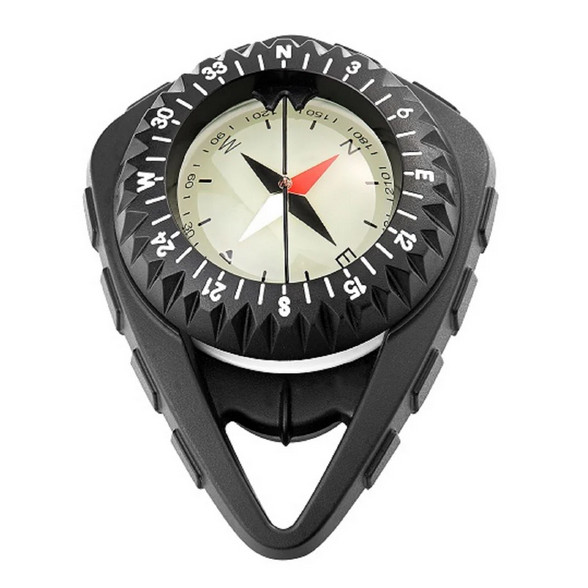
Scubapro FS-1.5 Scuba Diving Compass
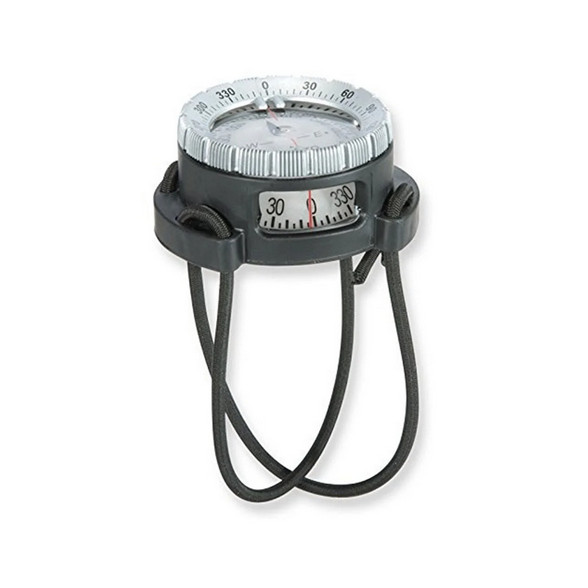
Suunto SK-8 Black Diving Compass
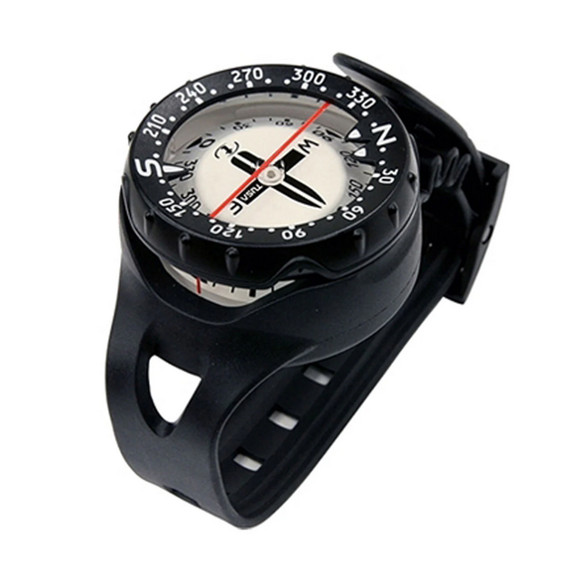
Tusa Platina Series Wrist Compass SCA-160 w


Key Takeaways
- Waterproof ratings exceeding 50 meters ensure reliable compass performance during deep underwater exploration and extended diving sessions.
- Glow-in-the-dark and luminescent markings enhance visibility in low-light conditions, murky water, and night diving scenarios.
- Larger dial sizes between 2.36 and 2.5 inches improve readability while maintaining accuracy during active underwater navigation.
- Ratcheting bezels with degree markings and dual pointer systems enable quick heading marking and accurate course tracking.
- Multiple attachment options including wrist mounts, clip mounts, and bungee mounts accommodate various equipment configurations and user preferences.
Scuba Compass, Professional Waterproof Dive Wrist Compass with TPU Band
For adventurers who demand reliability in aquatic environments, the Scuba Compass represents an essential navigation tool, combining professional-grade accuracy with versatile functionality across multiple outdoor pursuits. This wrist-mounted compass features a 2.36-inch analog dial with phosphorescent numerals, ensuring readability in low-light conditions. The device maintains a 50-meter depth rating, providing waterproof performance suitable for serious subaquatic operations. Its rotating ratchet bezel with double pointer facilitates quick heading and reciprocal heading marking, while the red lubber line assists orientation. The acrylic dial and TPU wristband deliver durability for extended use. The large side-reading window and 30-degree tilt capability support accurate navigation. An adjustable rubber band accommodates any adult wrist size, making it practical for recreational and professional divers alike.
Best For: Professional and recreational divers, outdoor adventurers, and anyone requiring reliable navigation in aquatic environments and wilderness settings.
Pros:
Cons:
Scuba Choice Diving Compass with Retractable Clip (Glow-in-The-Dark)

The Scuba Choice Submersion Compass with Retractable Clip represents an exceptional navigation tool for divers who prioritize accessibility and reliability without sacrificing performance. Its clip-on design attaches securely to BCDs or gear, extending up to 31.5 inches while retracting to a compact 7 inches for convenient storage. The glow-in-the-dark dial features luminous markings, ensuring visibility during low-light underwater conditions. At just 2.5 inches in diameter and weighing only ounces, this compass adds minimal bulk to plunge gear. The durable, waterproof construction withstands profound explorations, while its large, clear dial facilitates quick navigation checks suitable for both beginners and experienced divers. Its versatility extends across scuba diving, snorkeling, and freediving applications.
Best For: Divers of all skill levels who need reliable underwater navigation with convenient accessibility and low-light visibility.
Pros:
Cons:
OCEANIC Maxview Compass with Easy-to-Read Bearing Indicators
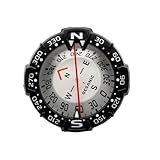
Navigation underwater demands precision and reliability, making the OCEANIC Maxview Compass an essential instrument for divers who prioritize accuracy in challenging aquatic environments. The compass features large, easy-to-read bearing indicators and a high-visibility lubber line, designed for quick reference during explorations. Its OceanGlo luminescent backing improves visibility in low-light conditions, while the large ratcheting bezel accommodates both top and side reading preferences. The device comes encased in a robust rubber boot for durability and protection. Available in multiple configurations—wrist, bungee, clipmount, hose mount, and module—the Maxview offers versatile attachment options. OCEANIC’s established reputation for quality diving equipment, spanning scuba, snorkeling, and water sports, guarantees divers of all skill levels can rely on this compass for dependable underwater navigation.
Best For: Divers of all skill levels seeking reliable underwater navigation with easy-to-read bearing indicators and versatile mounting options.
Pros:
Cons:
Trident Retractor Compass, Waterproof Oil Filled (for Scuba, Camping, Kayaking)

Explorers, campers, and kayakers seeking reliable underwater and outdoor navigation will find the Trident Retractor Compass particularly suited to their needs, given its combination of waterproof oil-filled construction and specialized design features. The compass incorporates a scratch-resistant polycarbonate case, ratcheting 360° bezel with 30° numbered increments, and twin heading indicators for precise course alignment. Its luminescent display guarantees visibility in low-light conditions, while the side window allows quick reference and gun-sight accuracy. The anatomical wrist band provides comfort during extended wear, and the high-visibility lubber line promotes reliable bearing readings across various visibility conditions, making this instrument an effective navigation tool for diverse outdoor activities.
Best For: Divers, campers, and kayakers who need reliable navigation in underwater and outdoor environments with varying visibility conditions.
Pros:
Cons:
Bungee Mount Glow in The Dark Waterproof Dive Compass

For snorkelers seeking reliable navigation in low-light conditions and demanding underwater environments, the Bungee Mount Glow in The Dark Waterproof Snorkel Compass offers a practical solution that combines visibility with durability. Manufactured by SAEKODIVE since 1969, this CE-approved compass features a glow-in-the-dark dial for improved night snorkeling visibility. The device remains functional at depths exceeding 230 feet, with a PC dial and PVC housing ensuring longevity. Its 360° rotating ratchet bezel with dual pointers allows precise course marking, while the prominent lubber line provides accurate orientation. The high-angle tilt mechanism prevents jamming, supporting smooth operation. Suitable for scuba diving, kayaking, and outdoor activities, this compass serves both adults and children, backed by a one-year warranty.
Best For: Outdoor enthusiasts including scuba divers, snorkelers, kayakers, and both adults and children who need reliable navigation in low-light underwater environments.
Pros:
Cons:
Cressi Compass with Adaptable Bungee Mount for Scuba Diving

The Cressi Compass stands as an ideal choice for snorkelers who require reliable directional guidance across varying underwater conditions and mounting preferences. Manufactured in Taiwan by the Italian pioneer brand Cressi, founded in 1946, this compass features a magnetic card permitting extensive movement for accurate readings. The luminous face, divided into 10° intervals, guarantees visibility in diverse lighting environments. Dual viewing methods—direct overhead observation or through a Gun-Sight Accurate window—provide improved precision. A red lubber line and rotating ratchet bezel with double pointer simplify straightforward heading and reciprocal heading documentation. The adaptable bungee mount allows flexible attachment across various water activities and support systems, making this compass exceptionally versatile for underwater navigation demands.
Best For: Divers and snorkelers of all experience levels who need a reliable, versatile compass with multiple viewing options and flexible mounting capabilities for underwater navigation.
Pros:
Cons:
Cressi Underwater Compass for Scuba Diving

Explorers seeking a dependable instrument for underwater navigation will find the Cressi Underwater Compass a practical choice, combining visibility in challenging conditions with straightforward functionality. The compass features a magnetic card allowing extensive movement for accurate readings, with a luminous face divided into 10° intervals. Dual viewing options—from above or through a precision Gun-Sight Accurate window—accommodate different navigation preferences. A red lubber line guarantees correct orientation, while the rotating ratchet bezel with double pointer facilitates easy heading marking. Measuring 2.36 inches in diameter and weighing 3.25 ounces, this compact instrument accommodates both strap and hose mounting. Manufactured by the Italian brand Cressi, established in 1946, it represents reliable underwater navigation technology.
Best For: Scuba divers and underwater explorers who need reliable navigation in challenging conditions with easy-to-read visibility and straightforward operation.
Pros:
Cons:
Oceanic Side Scan Compass Module w/ Clip Mount

Adventurers maneuvering through challenging underwater environments benefit significantly from the Oceanic Side Scan Compass Module w/ Clip Mount, a precision instrument engineered with proprietary technology that delivers quick response times and exceptionally smooth movement. The compass features top or side reading options, accommodating diverse navigation preferences and positioning needs. Its high-visibility lubber line guarantees clear directional reference in low-light conditions. The OceanGlo luminescent floating card absorbs ambient light and glows approximately seven times longer than competing materials, extending usability during extended descents. A large ratcheting bezel allows precise adjustments for accurate bearing settings. The clip mount design aids secure attachment to diving equipment, making this compass ideal for various marine navigation scenarios requiring reliability and durability.
Best For: Divers and underwater adventurers who require reliable directional navigation in challenging deep-water environments with extended bottom times.
Pros:
Cons:
Factors to Consider When Choosing a Diving Compass
Selecting the right diving compass requires evaluating multiple technical specifications that directly impact performance and usability underwater. Key considerations include the waterproof depth rating, which must exceed your maximum diving depth; readability in low-light conditions, crucial for underwater navigation where natural light diminishes; attachment and mount options that securely integrate with your equipment; dial size and accuracy that allow precise bearing readings; and bezel functionality and design that facilitate reliable course plotting. Each factor plays a critical role in ensuring your compass delivers dependable navigation data when safety and orientation matter most.
Waterproof Depth Rating
The waterproof depth rating stands as one of the most critical specifications when evaluating a submersion compass for purchase or use. Many compasses are rated for depths up to 50 meters, equivalent to 5 ATM pressure, ensuring reliable underwater performance. A higher depth rating provides additional assurance that the compass functions correctly during deeper descents and challenging aquatic environments. Most submersion compasses utilize durable materials that resist water pressure at specified depths, contributing to overall durability and longevity. Users should carefully consider the depth rating relative to their specific submersion activities; those pursuing deeper explorations require compasses rated for greater depths. The waterproof rating ultimately indicates the compass’s ability to resist water ingress, maintaining functionality during extended underwater exploration.
Readability in Low Light
Because underwater visibility decreases significantly with depth and water conditions, readability in low light becomes a fundamental consideration when selecting a diving compass. Luminescent markings and phosphorescent cards improve visibility during night dives or in murky water, allowing divers to navigate safely without straining their vision. Large, clear numbers and high-contrast indicators boost readability when submerged, guaranteeing accurate course plotting even in compromised lighting. A high-visibility lubber line provides better orientation and navigation accuracy in dark environments. Dual viewing options, offering both top and side readings, allow divers to check angles without difficulty in low-light situations. These features collectively guarantee that divers maintain reliable navigation capabilities regardless of environmental conditions, supporting safer and more confident underwater exploration.
Attachment and Mount Options
Beyond the compass face itself, how a swimmer secures their navigation tool significantly influences both functionality and comfort underwater. Plunging compasses offer several attachment options, each designed for different diving styles and equipment configurations. Wrist mounts feature adjustable bands that provide comfortable fit and easy readability during navigation. Clip mounts attach securely to buoyancy control devices or gear, ensuring quick accessibility when needed. Bungee mounts deliver flexible attachment, allowing easy adjustment and detachment for divers engaged in multiple water activities. Hose mounts offer alternative positioning on diving equipment. These various attachment methods minimize added bulk to gear while maintaining convenient access. Selecting the appropriate mount option depends on individual plunging preferences, equipment setup, and how divers prioritize accessibility and comfort during underwater exploration.
Dial Size and Accuracy
While attachment methods determine how swimmers secure their compasses to gear, the compass dial itself plays a similarly significant role in navigation success. Dial size directly impacts readability, with larger diameters—typically 2.36 to 2.5 inches—offering clearer bearing visibility during underwater navigation. High accuracy remains crucial, as minor reading deviations produce substantial directional errors beneath the surface. Quality underwater compasses maintain precision even when tilted up to 30 degrees, accommodating varying underwater conditions and body positions. Luminous dial markings significantly improve visibility in low-light or murky environments, enabling swimmers to read bearings accurately without external light sources. Selecting a compass balancing adequate dial size with luminous features guarantees reliable navigation and safer underwater exploration throughout varying conditions.
Bezel Functionality and Design
The bezel of a plunging compass serves as a critical navigation tool, functioning as a rotating ring that allows snorkelers to mark headings and track reciprocal courses with precision. Modern exploration compasses typically feature degree markings on the bezel, allowing snorkelers to make accurate adjustments based on environmental conditions encountered underwater. Many contemporary models incorporate a dual pointer system, which promotes faster and easier directional reading during explorations.
A well-designed bezel prioritizes smooth rotation and includes a robust locking mechanism to prevent accidental adjustments during use. Bezel usability significantly impacts navigation efficiency, particularly in challenging conditions such as murky water or nighttime explorations where visibility remains severely limited. These features collectively improve a snorkeler’s ability to maintain accurate headings and safely navigate complex underwater environments.
Material Durability and Build
Material durability and build quality fundamentally determine whether a submersion compass will perform reliably in demanding underwater environments. Manufacturers typically employ scratch-resistant polycarbonate cases and robust rubber boots, which protect against the harsh conditions divers encounter. The dial itself requires high-grade acrylic or premium plastics to prevent fogging and maintain clarity under pressure. Waterproof ratings of at least 5 ATM or 50 meters depth capability are crucial standards for deep diving compasses. Material selection furthermore influences overall weight and portability; lightweight options reduce bulk without compromising durability. Ergonomic design features, including contoured wristbands and adjustable mounts, improve comfort during extended underwater use while minimizing wear. These combined material considerations guarantee compasses withstand extreme pressures and provide consistent navigational accuracy throughout demanding diving operations.
Ease of Navigation Features
Since underwater navigation demands quick decision-making under challenging conditions, ease of navigation features represent a critical consideration when selecting a diving compass. Easy-to-read bearing indicators support rapid navigation checks, even in low light environments where visibility is severely compromised. A rotating ratchet bezel allows divers to mark headings and reciprocal headings efficiently, enhancing navigational accuracy during complex explorations. The red lubber line aids proper orientation, helping users align their heading correctly without confusion. Dual viewing methods, such as top and side reading options, provide flexibility for diverse underwater situations and individual preferences. Luminous displays or glow-in-the-dark features significantly improve visibility, enabling divers to take accurate readings during night dives or in murky water conditions.