Cold water immersion demands specialized protective equipment. Wetsuits rated for frigid conditions prevent hypothermia and maintain core body temperature through advanced neoprene technology. Thickness ratings, material composition, and closure mechanisms directly impact thermal retention and mobility. Selecting appropriate gear requires understanding specific water temperatures, activity duration, and individual tolerance levels. The following options represent current industry standards for performance and reliability.

Recommended Cold Water Wetsuits


Key Takeaways
- Neoprene thickness of 5mm to 7mm provides essential thermal insulation for water temperatures below 53.6℉.
- Advanced seam construction and YKK zippers minimize water infiltration and ensure corrosion resistance for durability.
- Close-fitting designs with reinforced knee pads and neck gaskets maximize heat retention and protection.
- Back zippers and flexible entry/exit designs enable easy donning while maintaining optimal thermal effectiveness.
- Multi-sport versatility allows seamless transitions between surfing, snorkeling, kayaking, and diving without sport-specific equipment.
3MM Neoprene Full Body Wetsuit for Cold Water
The 3MM neoprene full body wetsuit serves as an ideal choice for individuals engaged in prolonged cold water activities such as surfing, kayaking, and snorkeling. Constructed from premium 3MM neoprene, this garment delivers superior thermal insulation while maintaining exceptional flexibility through its 150% high-stretch capability. The form-fitting design minimizes water drag, enhancing performance efficiency. Full body coverage with extended sleeves provides extensive protection against cold exposure, UV radiation, jellyfish, and sea lice. Reinforced flatlock stitching guarantees durability under demanding conditions, while tidy line stitching reduces skin friction hazards. Available in sizes XS to XXXL with a draw cord front zipper for practical donning and doffing, this wetsuit accommodates diverse body measurements and water sports applications.
Best For: Individuals engaged in prolonged cold water activities such as surfing, kayaking, and snorkeling who require superior thermal insulation and full-body protection.
Pros:
Cons:
Hevto Men 3/2mm Neoprene Wetsuit Back Zip
Constructed from 3/2mm neoprene with nylon stretch fabric, this wetsuit serves beginner and amateur male water sports enthusiasts requiring reliable thermal protection and flexibility. The back zipper design enhances efficient donning and doffing, with an extended nylon belt providing secure fastening. The 3/2mm thickness offers adequate insulation for cold water immersion while maintaining mobility across diving, surfing, swimming, and snorkeling applications. The neoprene’s thermal properties generate heat through friction as the thin water layer warms against the body. The royal blue and black colorway combines functional visibility with aesthetic appeal, making this option suitable for recreational water sports practitioners prioritizing durability and temperature regulation.
Best For: Beginner and amateur male water sports enthusiasts seeking reliable thermal protection and flexibility for cold water activities like surfing, diving, swimming, and snorkeling.
Pros:
Cons:
Wetsuits Men’s 7mm Neoprene Full Body Diving Suit
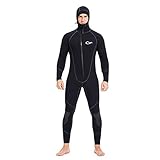
WYYHAA’s Ultra Stretch 7mm Neoprene suit serves cold-water enthusiasts—divers, snorkelers, and swimmers—requiring thermal protection in temperatures below 53.6℉. The front-zip design promotes efficient donning and removal, while 4-thread flat lock stitching guarantees durability and flexibility during extended aquatic activities. Constructed from stretchy neoprene and elastic nylon, the full-body suit with UV protection coating minimizes sun exposure and abrasion injuries. Initial tightness is intentional, optimizing buoyancy and thermal retention. Users should note the suit runs smaller than standard sizing; selection should prioritize weight considerations before height. With a 4.2-star rating across 153 customer reviews, this suit demonstrates reliable performance for cold-water applications.
Best For: Cold-water enthusiasts including divers, snorkelers, and swimmers who need thermal protection in temperatures below 53.6℉.
Pros:
Cons:
XUKER Neoprene Water Gloves for Diving & Surfing
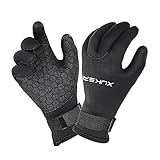
For water sports enthusiasts requiring reliable thermal protection and dexterity, XUKER Neoprene water gloves deliver dual-layer insulation and functional grip across demanding aquatic environments. Available in 3mm and 5mm thicknesses, these gloves employ glued blind stitching construction for ideal strength and flexibility. The anti-slip rubber palms guarantee secure handling during plunging, snorkeling, and surfing operations. An adjustable wrist closure minimizes water infiltration while maintaining thermal efficiency. Premium neoprene construction provides critical protection against abrasive surfaces and marine hazards. The unisex ergonomic design spans sizes XS to 2XL, accommodating diverse hand morphologies. These gloves represent practical thermal defense for cold-water activities without compromising manual capability.
Best For: Water sports enthusiasts who need reliable thermal protection and grip performance in cold-water diving, surfing, snorkeling, and other demanding aquatic activities.
Pros:
Cons:
XUKER Neoprene Wetsuit Full Body Dive Suit

The XUKER Neoprene Wetsuit Full Body Plunge Suit delivers reliable thermal protection through a three-layer construction comprising thick neoprene insulation, a soft nylon inner layer that minimizes chafing, and a durable outer nylon shell. Available in 2mm and 3mm thicknesses, this full-body suit maintains core temperature by trapping a thin water layer between neoprene and skin. The back zip design promotes efficient entry and exit. Protection extends to stinging marine organisms and abrasive underwater surfaces. With a 4.5-star rating across 1,909 reviews and ranking eighth in full wetsuits, the suit accommodates multiple water sports including diving, surfing, and kayaking. Its composition of 90% neoprene and 10% nylon guarantees durability and thermal performance for cold-water applications.
Best For: Cold-water enthusiasts and athletes seeking durable thermal protection for diving, surfing, kayaking, and other water sports.
Pros:
Cons:
Hevto Men Neoprene Wetsuit 3/2mm Back Zip

Beginner and amateur male water sports enthusiasts will find the Hevto Men Neoprene Wetsuit 3/2mm Back Zip particularly well-suited for cold water activities. Constructed from 3/2mm neoprene with nylon stretch fabric, this suit provides thermal insulation while maintaining flexibility and comfort. The back zipper design features a lengthened nylon belt for straightforward operation. Its versatile construction accommodates multiple water sports, including surfing, diving, kayaking, and paddleboarding. With a 4.5-star rating from nearly 4,000 reviews, the wetsuit demonstrates proven reliability. The contrasting royal blue sleeves and side seams offer visibility considerations for safety. Weighing 0.95 kilograms, the suit balances durability with manageable weight for extended water exposure.
Best For: Beginner and amateur male water sports enthusiasts seeking thermal protection and flexibility for cold water activities like surfing, diving, kayaking, and paddleboarding.
Pros:
Cons:
Lansru 5/4mm Neoprene Wetsuit for Cold Water

Lansru’s 5/4mm neoprene construction delivers superior thermal retention for cold water enthusiasts requiring extended immersion protection. The 5mm CR neoprene core provides exceptional elasticity and insulation, surpassing standard SBR alternatives, while 4mm high-elasticity sections at the neck and limbs optimize mobility. A seamless design with super-stretchy yarn lining minimizes restriction and irritation during prolonged use. The full-length configuration offers thorough protection against marine hazards, including jellyfish stings and reef abrasions, with reinforced knee pads for impact resistance. A YKK front zipper streamlines entry and exit, while nylon outer plating improves durability. OEKO-TEX STANDARD 100 certification confirms safety standards for extended skin contact in cold water environments.
Best For: Cold water athletes and recreational enthusiasts such as surfers, divers, and snorkelers who need extended thermal protection and comprehensive protection against marine hazards.
Pros:
Cons:
Factors to Consider When Choosing Cold Water Wetsuits
Selecting an appropriate cold water wetsuit requires evaluating multiple critical factors that directly impact thermal protection and safety. Key considerations include neoprene thickness and protection levels, material quality and durability standards, fit and sizing accuracy, zipper design and functionality, and thermal insulation capabilities. Each element contributes to the wetsuit’s performance in maintaining core body temperature during extended water exposure.
Neoprene Thickness And Protection
Because of water temperature directly affecting heat loss from the body, neoprene thickness serves as the primary variable in determining a wetsuit’s thermal protection capability. Thicker neoprene insulates effectively; 5mm suits maintain warmth below 60°F, while 3mm suits function adequately between 60°F and 70°F. Nonetheless, increased thickness reduces flexibility and mobility, requiring users to balance thermal protection against dexterity demands.
Beyond insulation, neoprene wetsuits incorporate critical protective features including UV shielding and marine life defense through reinforced coverage. These elements safeguard skin from sun exposure and stings or cuts from aquatic organisms. Proper fit amplifies these benefits—snug construction traps heat efficiently without compromising circulation or restricting movement, ensuring both safety and comfort during cold water activities.
Material Quality And Durability
While neoprene thickness establishes the foundation for thermal protection, the material composition and construction quality determine whether a wetsuit maintains its insulating properties throughout extended use.
High-quality wetsuits incorporate nylon layering to improve durability and flexibility, reducing degradation from repetitive movements and UV exposure. Advanced seam construction methods—including glued blind stitching and flatlock seams—minimize water infiltration while maximizing comfort and longevity. These techniques prevent cold water from breaching the wetsuit’s thermal barrier, a crucial safety consideration in extreme conditions.
Premium components further distinguish superior wetsuits. YKK zippers provide reliable closure mechanisms resistant to corrosion, while reinforced knee pads protect high-stress areas from punctures and abrasion. These durability features guarantee consistent thermal performance and extend the wetsuit’s operational lifespan, making them vital investments for serious cold water athletes.
Fit And Sizing Accuracy
Proper sizing represents a critical determinant of thermal protection and safety in cold water environments. Accurate measurements of chest, waist, and hips are vital, as sizing tolerances typically allow ±1cm variation across XS to XXXL ranges. A correctly fitted wetsuit should feel snug when dry, though controlled loosening occurs upon water immersion, optimizing insulation efficiency. Certain brands deliberately design initial tightness to improve buoyancy and thermal retention during cold water activities. Size variance exists among manufacturers; some models run smaller than standard specifications, necessitating adjustments based on individual weight and height parameters. Seamless construction around sensitive areas and adjustable closures significantly reduce water infiltration and irritation. Precise fitting guarantees maximum thermal protection and comfort during extended cold water exposure.
Zipper Design And Functionality
Since zippers represent the primary access mechanism for cold water wetsuits, their design directly impacts both donning efficiency and thermal integrity. Back zippers typically employ two-step mechanisms, facilitating user-friendly operation, while front zippers offer superior mobility at the expense of increased sealing complexity. Corrosion-resistant construction proves vital, as regular saltwater and chlorine exposure accelerates material degradation and compromises functionality. Sturdy zipper engineering prevents water leakage and maintains insulation effectiveness during extended cold water immersion. Complementary features such as adjustable wrist closures improve closure precision, minimizing thermal loss through entry points. A well-executed zipper design allows for smooth, reliable operation while withstanding environmental stressors, ultimately extending wetsuit longevity and ensuring consistent thermal protection in demanding conditions.
Thermal Insulation Capabilities
Beyond zipper engineering, thermal insulation represents the foundational performance metric for cold water wetsuits. Neoprene thickness directly correlates with warmth protection, with 2mm to 7mm variants addressing different thermal demands. Premium materials like SCR neoprene provide superior elasticity and heat retention, critical for prolonged exposure in frigid conditions. Water temperature tolerance guidelines establish that suits exceeding 5mm thickness are vital for sustained use below 53.6℉. Construction features significantly improve insulation efficacy: seamless designs minimize water circulation patterns, while neck gaskets substantially reduce heat loss through vulnerable areas. The thermal mechanism relies on trapping an insulating water layer against skin, which body heat gradually warms. Selecting appropriate thickness and construction quality guarantees adequate temperature regulation and extends safe underwater duration.
Versatility Across Water Sports
Cold water wetsuits engineered for multi-sport performance address the practical needs of aquatic enthusiasts pursuing diverse activities. These garments accommodate surfing, snorkeling, plunging, kayaking, and swimming through versatile design specifications. Stretchy materials and reinforced stitching allow rapid transitions between sports while maintaining thermal integrity. Back zippers and ergonomic construction support efficient dressing and movement across varying water conditions.
The thermal insulation layer traps and warms a thin water film against the body, providing consistent protection during different aquatic pursuits. This design principle guarantees reliable performance whether participants engage in high-intensity surfing or stationary snorkeling.
Selecting a multi-sport wetsuit represents a prudent investment for year-round water activities. Quality construction improves buoyancy and reduces drag, optimizing performance across multiple disciplines while eliminating the need for sport-specific equipment.
Conclusion
Selecting an appropriate cold water wetsuit transcends mere comfort—it becomes a matter of physiological necessity. Like armor protecting a warrior, neoprene thickness and construction shield users from hypothermia in frigid aquatic environments. Whether choosing 3mm for moderate conditions or 7mm for extreme temperatures, prioritizing thermal protection, durability, and fit directly correlates with survival and performance. Proper wetsuit selection remains non-negotiable for safe cold water recreation.